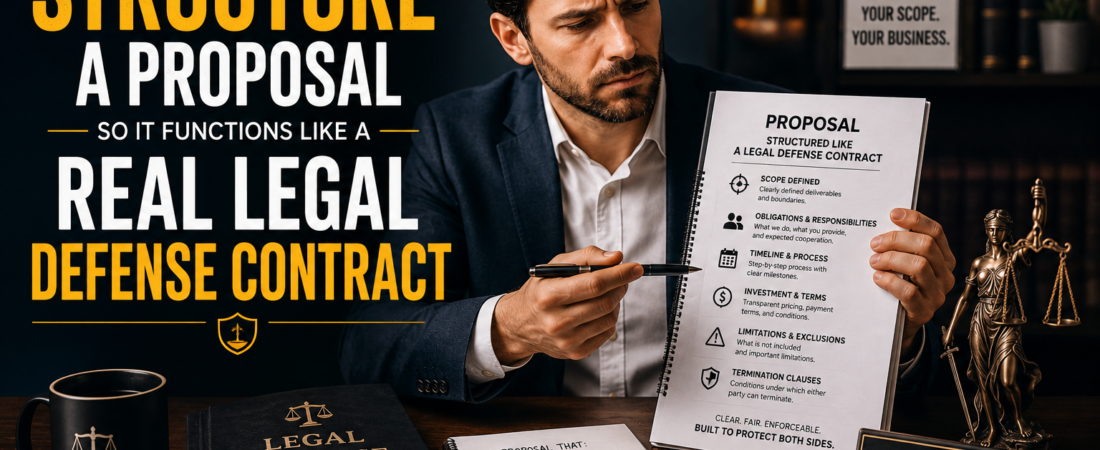
Why are you still sending beautifully designed, multi-page PDF proposals that read like a creative wish list ?
Have you ever spent hours crafting an estimate, only to watch the client disappear with your ideas or delay your payment for months ?
Look, the internet is packed with terrible advice telling you to focus on fancy typography, mood boards, and colorful pricing tiers. now its time to draft Legal Defense Contract.
Here’s the thing : creative fluff does not pay bills, and it certainly does not protect your cash flow when a professional relationship goes sour.
Table of Contents
If your proposal is just a casual, itemized description of deliverables sent over email without a clear signature field, you are exposed. You are essentially operating on a prayer, hoping the client stays honest.
Proposal Architecture Comparison
The structural evolution from vulnerable estimates to a bulletproof defense system.
When you treat your proposal as a separate entity from your legal terms, you create a dangerous operational friction.
Clients gladly sign a proposal because it looks friendly, but they drag their feet when a heavy, ten-page legal agreement lands in their inbox.
I learned this the hard way after losing thousands of dollars to a tech startup that loved my strategy but hated my separate contract.
The relief comes when you realize you can merge these two documents into a single, cohesive instrument.
By turning your proposal into an actionable Legal Defense Contract, you eliminate the double-signing friction and secure your business upfront.
The Danger of Casual Estimates
Most independent creators treat proposals like a menu at a diner.
You list your services, add a price tag, and assume that an email saying “let’s go” protects you.
It does not.
A casual estimate lacks the fundamental architecture of a binding agreement.
If a client decides to pivot, pause, or ghost you mid-project, an itemized list gives you zero leverage to claim damages.
Without integrated master terms, your scope of work is fluid, meaning the client can demand infinite revisions without paying extra.
This is exactly how scope creep quietly destroys your profitability.
You must stop sending documents that only outline what you will do, without defining what happens when things go wrong.
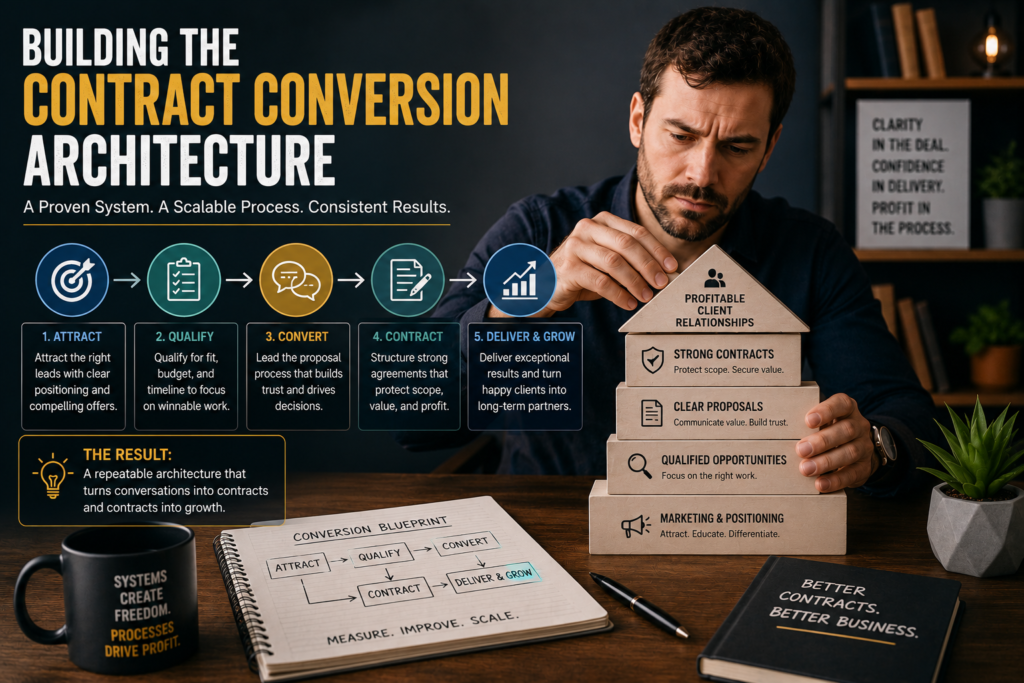
Building the Contract Conversion Architecture
1. The Statement of Absolute Scope
You need to define your deliverables with granular precision, leaving no room for subjective interpretation.
Instead of writing “Website Redesign,” you must list the exact number of pages, wireframes, and revision rounds included.
Specify what is explicitly excluded from the project scope to prevent unexpected feature requests later.
2. The Integrated Master Terms Section
Do not bury your legal terms in a separate document that requires another round of negotiation.
Place your terms directly below your project scope within the same document flow.
This ensures that when the client signs the document, they are explicitly agreeing to both the work and the rules.
3. The Rights Reservation Clause
Intellectual property should never transfer to the client upon creation or delivery.
Your document must state that all creative rights remain your exclusive property until the final invoice is paid in full.
This single clause changes your status from an unpaid beggar to an asset owner protecting their property.
4. The Payment Milestones and Trigger Events
Clearly outline when payments are due based on objective calendar dates or specific project milestones.
Avoid tying payments to subjective client approvals, which can be infinitely delayed.
Specify that work pauses automatically if a milestone payment is missed by more than forty-eight hours.
Designing the Signature Page Hierarchy
The final page of your proposal is where the actual transformation happens.
It should not look like an afterthought; it must serve as the closing anchor of your agreement.
Final Signature Page
Master Terms Incorporation Acknowledgment
“By signing below, the Client explicitly acknowledges that they have read, understood, and agreed to the Master Terms outlined on Pages 3–5 of this document.”
Directly above the signature lines, place a bold, clear statement of acknowledgment.
This statement must declare that the signer has read and accepted the integrated master terms listed on the preceding pages.
By structuring the page this way, you prevent the client from claiming they only signed off on the budget.
Case Study : The Exploited Brand Strategy
Let’s look at a real-world scenario involving an independent brand strategist based in New York.
She sent a standard, itemized proposal to an e-commerce brand for a complete identity overhaul.
The client loved the proposal, replied via email to begin, and pushed for an immediate kickoff workshop.
The strategist delivered the initial brand assets and strategy briefs on schedule, assuming the invoice would follow smoothly.
Instead, the client took the assets, launched their new website, and began delaying the milestone payment.
Every time she followed up, the client blamed an internal accounting loop or missing executive approvals.
Because her original document was just an estimate without signature fields, she was left stranded.
The client was actively using her creative work to generate revenue while refusing to clear her balance.
She eventually had to learn What to Do When a Client Uses Your Work But Refuses to Pay You to fight back.
If she had used an integrated approach, the client wouldn’t have legally owned the rights to use those assets.
She could have issued a formal cease-and-desist notice based on copyright infringement rather than chasing a bad debt.
This case study proves that a proposal without legal teeth is just free labor waiting to happen.
The Independent Contractor Risk Matrix
| Risk Level | Scenario Type | Structural Vulnerability | Corrective Proposal Action |
| High Risk | No signature, verbal or email approval only, vague scope. | Complete lack of leverage; client can walk away freely. | Require digital signatures on integrated terms before kickoff. |
| Medium Risk | Signed proposal, but legal terms are in a separate link. | Client can claim they never saw or clicked the external link. | Move all master terms directly into the main proposal document. |
| Low Risk | Signed proposal with integrated terms and rights retention. | Minimal; clear path to recovery if payments are delayed. | Enforce automated pause clauses the moment a milestone passes. |
Interactive Clause and Late Fee Calculator
Use this interactive tool to estimate your exposure and generate a custom, protective late fee clause for your proposal.
Proposal Protection Calculator
Quantify your cash-flow risk and generate enforceable late-fee terms instantly.
Concrete Clauses for Your Proposal Flow
The Payment Terms Anchor
“All payments shall be made according to the schedule detailed herein. Payment obligations are independent of client commercial launches or internal approval cycles.”
You must select your timeline carefully; evaluate Net 15 vs. Net 30 vs. Net 45: Which Payment Terms Protect Your Cash Flow ? to decide what suits your cash flow.
The Kill Fee and Termination Provision
“If the Client terminates this project prior to completion, the Client agrees to pay a kill fee equal to 100% of the value of all work performed up to the date of written termination notice, plus a 20% administrative cancellation fee.”
The Jurisdiction and Dispute Resolution Lock
“This agreement shall be governed by the laws of [Your State/Country]. Any disputes arising from this contract shall be resolved through binding arbitration in [Your City], with the losing party covering all legal fees.”
Evidence Checklist for Freelance Protections
- [ ] Executed Document : A copy of the proposal signed by an authorized representative of the client company.
- [ ] Scope Boundaries : A detailed, itemized list of what is included and explicitly excluded from the project.
- [ ] Written Communications : Saved PDF records of emails where the client explicitly approves project directions or variations.
- [ ] Delivery Proof : Timestamped receipts, upload logs, or transfer confirmations showing deliverables were successfully sent.
- [ ] Read Receipts : Email tracking logs showing that invoices and follow-ups were opened by the client.
- [ ] Chat Backups : Exported message histories from Slack, Teams, or alternative apps used during the active project timeline.
If you communicate heavily through mobile channels, understand the legal boundaries by checking Can a WhatsApp Chat Count as a Legally Binding Contract? (US & UK Law).
Global Jurisdictions : India vs. Global Frameworks
Enforcing an integrated proposal contract changes significantly depending on where you and your clients are physically located.
United States Framework
In the US, contracts are heavily governed by state common law and the Uniform Commercial Code (UCC).
An integrated proposal with clear offer, acceptance, and consideration functions perfectly as a legal contract in all states.
Digital signatures are fully protected and enforceable under the federal Electronic Signatures in Global and National Commerce (ESIGN) Act.
United Kingdom Framework
The UK relies on clear principles of contract law where an agreement is binding once consideration changes hands or work begins.
Freelancers can also utilize statutory protections under the Late Payment of Commercial Debts (Interest) Act (UK Legislation).
This allows you to claim fixed compensation and interest on late payments even if your initial proposal skipped fine details.
Indian Jurisdiction Framework
In India, agreements fall under the Indian Contract Act, 1872, which recognizes electronic agreements and digital signatures as fully valid.
Furthermore, if you register your freelance business under the Micro, Small and Medium Enterprises Development (MSMED) Act, 2006, you gain immense leverage.
Clients who delay payments beyond forty-five days face mandatory compound interest penalties that are three times the bank rate set by the Reserve Bank of India.
Escalation Strategies for Non-Payment
When a proposal contract is breached, you do not immediately run to a courtroom; you execute a structured escalation sequence.
First, issue a firm, polite notice reminding the client of the specific milestone terms they signed in the proposal.
If they do not respond within forty-eight hours, look into My Client Ghosted Me After I Sent the Invoice—What Do I Do Now ? to maintain control.
The Late Payment Escalation Protocol
A precise, step-by-step dunning sequence designed to defend your billing rights systematically.
Invoice Due
Standard delivery of the original invoice file to accounts payable.
Friendly Reminder
Polite checkout nudge confirming receipt and checking for processing hitches.
Soft Pause Notice
Formal notice warning that active production stops if balance is left clear.
Rights Revocation
Complete shutdown of services and intellectual asset use revocation.
Next, clear up any procedural issues within their internal finance department.
You can find actionable tips on this by reading How to Design an Invoice That Accounts Payable Teams Can’t Ignore.
If the client continues to stall, apply pressure by letting them know that interest fees are accumulating daily under your contract terms.
To understand your specific regional boundaries for penalties, look at Can You Legally Charge Interest on Late Invoices ? (US,UK, & India Rules).
If the delay stretches into weeks, you must determine When is it Officially Time for a Freelancer to Take Legal Action? to protect your business assets.
Fortunately, a properly integrated proposal contract gives you the foundation to fix things yourself without spending a fortune on legal fees.
You can discover the exact steps to do this by reading How to Recover an Unpaid Invoice Yourself (Without Hiring a Lawyer).
Quick Decision Guide : Is Your Proposal Protected ?
Is Your Proposal Protected?
Full Legal Defense Shield
Your proposal operates as an authentic contract framework. Your cash flow and structural property rights are completely insulated against transactional liability.
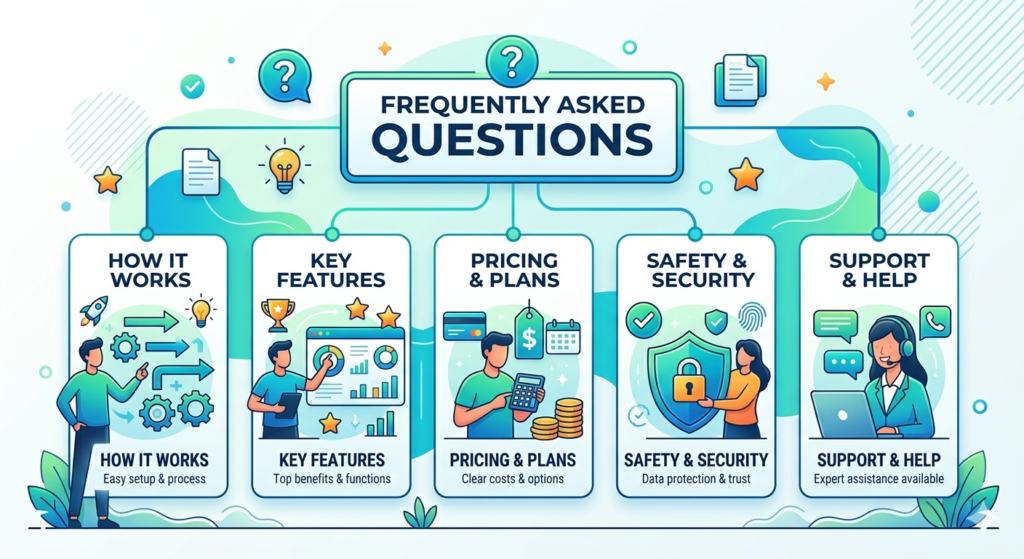
Frequently Asked Questions
Can a signed proposal really hold up in court like a traditional contract ?
Yes, absolutely. A contract does not need to look like a boring legal scroll to be valid.
If your proposal contains a clear offer, explicit acceptance, a clear definition of value exchange, and mutual signatures, it is a binding contract.
Courts care about mutual assent and clear terms, not fancy legal jargon or expensive formatting.
What should I do if a client refuses to sign a proposal that contains legal terms ?
If a client objects to your built-in master terms, consider it a massive red flag for your business.
It usually means they want the freedom to alter the scope or delay your payments without consequences.
Politely explain that these terms protect both parties and ensure a smooth, predictable project workflow.
How do I handle scope changes if my proposal is already signed ?
Never handle scope changes through casual phone conversations or unrecorded chat messages.
Issue a brief, formal document called a “Scope Change Order” that references your original signed proposal.
Outline the new deliverables, the additional fees, and require a signature before performing any extra work.
Does a digital signature carry the same weight as a physical pen signature ?
Yes, digital signatures are fully binding across most global jurisdictions, including the United States, Europe, and India.
Platforms that track IP addresses, email verifications, and timestamps provide excellent, court-admissible evidence of agreement.
Avoid accepting simple typed names in regular emails; use an actual signing platform or signed PDF.
Can I legally stop working if a client misses a payment milestone ?
Yes, provided that your integrated terms explicitly include a work suspension clause for non-payment.
Without this clause, pausing your work could technically put you in breach of your own agreement.
Always include a term that permits an automatic pause if an invoice remains unpaid past its deadline.
About Author
Adv. Sagar Haribhau Shirsat is an active legal professional specializing in commercial transaction architectures, cross-border corporate compliance, and digital debt recovery systems. He designs strategic asset-protection and recovery frameworks that help freelancers, independent contractors, and global agencies defend their cash flow and enforce their billing rights. Connect via his Official Professional LinkedIn Profile.
Disclaimer: This guide is intended for educational purposes and risk management analysis. It does not replace formal legal counsel. For specific cross-jurisdictional contract disputes, always consult a certified attorney or local legal advocate.