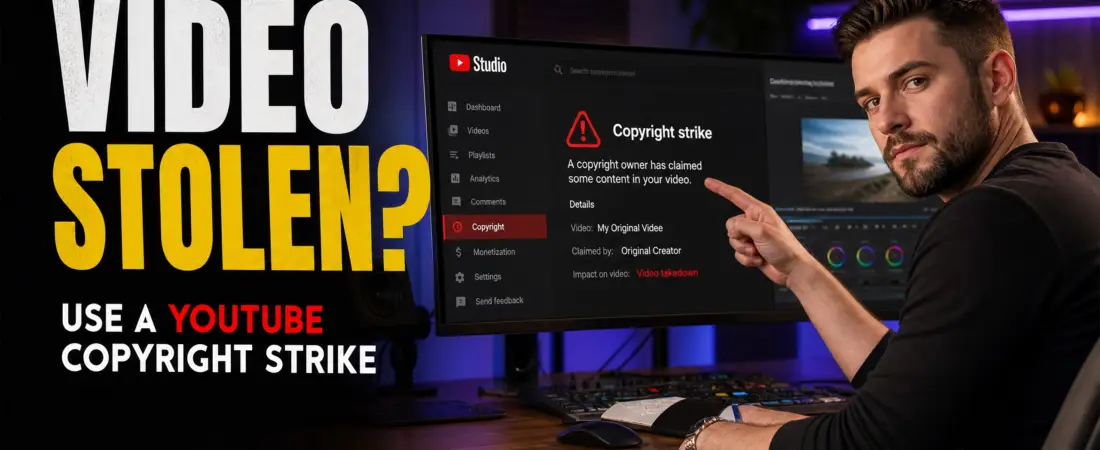
You are looking at a panicked, slightly angry email from your client begging you to retract a YouTube copyright strike.
That is the solution. That is where this ends. You hold all the cards, and your invoice is about to be paid in full.
But let’s rewind to how we got here.
You finished the edit. You exported the low-res file. You uploaded it to a review platform. You locked down the download permissions.
You thought you were entirely safe.
If a client used your video without paying, you generally still own the copyright unless your agreement transferred it earlier. Document the infringement, preserve evidence, and if you have a good-faith basis that the upload is unauthorized, consider sending a formal notice or submitting a DMCA takedown request. Avoid filing false copyright claims.
Then you scroll through your feed and see the unthinkable. The client used my video without paying and published it on YouTube.
They ignored your final invoice, opened a screen recorder, ripped the playback, and published it to their audience.
Look, I have been exactly where you are sitting. I know that specific stomach drop.
You feel violated. You feel foolish for trusting them with the link. Please, do not blame yourself.
Early in my freelance career, I also experienced a client publishing an unpaid draft. That experience fundamentally changed the way I structure contracts and deliver review copies today.
But over the years, I learned exactly how to handle this. You do not need to yell, threaten, or panic.
You just need to understand the mechanics of digital leverage.
This is my frame-by-frame enforcement guide. I am going to show you how to legally and systematically force them to take it down—or pay up.
If you are wondering what to do when a client uses your work but refuses to pay you, the answer starts with taking a deep breath and documenting everything.
Table of Contents
The Frame.io Screen Recording Theft
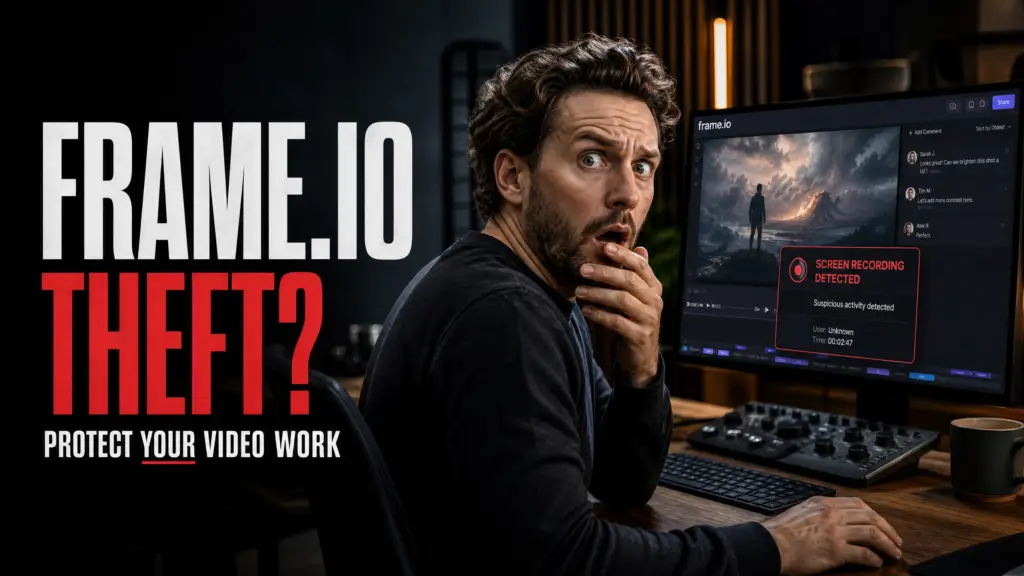
Let’s talk about how they actually pulled this off.
Platforms like Frame.io, Vimeo, and Dropbox have excellent security features. You disabled the download button. You did your job.
But no platform can stop a determined client with Open Broadcaster Software (OBS) or QuickTime.
They simply maximized the browser window, hit play, and recorded their own screen.
They do not care about the dropped frame rate. They do not care about the audio compression.
They certainly do not care about your watermark right across the center of the visual.
They just want free content to feed their algorithm.
This happens constantly in the creator economy. Brands and influencers burn through video editors, ripping drafts to avoid paying final milestones.
You might feel powerless because they already have the asset. But here is the thing: they handed you a massive legal advantage.
By stealing the draft, they didn’t just breach a contract. They committed federal copyright infringement.
And if you included a content kill clause in your initial agreement, your position is even stronger.
Does a Watermark Help Prove Copyright Infringement ?
In copyright disputes, intent matters.
If a client accidentally uploads the wrong file version, a judge might view it as an innocent mistake.
But a watermark changes the entire legal landscape.
When the client unlocked the video proof link but used your video without paying to YouTube, they destroyed their own defense.
A watermark is a digital lock. Bypassing it, or ignoring it to publish the work, proves malicious intent.
Under the US Digital Millennium Copyright Act (17 U.S.C. § 1201), circumventing technological measures designed to protect copyrighted work is a serious violation.
They cannot claim ignorance. The giant, semi-transparent text reading “UNPAID DRAFT” proves they knew the transaction was incomplete.
This is exactly why learning how to watermark your UI/UX deliverables and video files is your first line of defense.
It turns a simple late-payment dispute into a clear-cut case of willful intellectual property theft.
How to File a YouTube DMCA Takedown / Copyright Strike Filing
Now, it is time to strike back. Calmly.
Do not send them an angry text message. Do not leave a nasty comment on their video.
You are a professional business owner. You speak the language of compliance and infrastructure.
You are going to file a formal DMCA takedown notice directly with YouTube.
YouTube’s copyright system is ruthless. It operates on automation and legal liability.
When you submit a valid copyright claim, YouTube does not ask the client for their side of the story first. They pull the video down immediately.
If the client gets three copyright strikes, their entire channel is permanently deleted.
This is your leverage.
Go to YouTube Studio. Navigate to the Copyright section, and submit a “New Removal Request.”
You will need to swear under penalty of perjury that you own the rights. Since they haven’t paid you, In many freelance agreements, copyright or the commercial license transfers only after full payment.
However, this depends on the wording of your contract and applicable law. Review your agreement carefully before taking enforcement action.
It is entirely your property.
Before you file, you might want to know how to write a clean cease-and-desist letter as a warning. But in blatant theft cases, I prefer striking the video first.
Collecting the Penalized Asset Fee
Once the video vanishes and the copyright strike hits their account, their tone will change instantly.
The ghosting stops.
Suddenly, they are in your inbox, apologizing, blaming an “assistant,” and asking how to fix it.
If your client ghosted you after the invoice, this is the fastest way to resurrect the conversation.
Here is where freelancers make a critical mistake. They just ask for the original invoice amount.
No. The original invoice was for a standard business transaction.
They voided that agreement when they stole the work. Now, they are paying a retroactive licensing fee for unauthorized commercial use.
I always add a 50% penalty fee to the final invoice before I agree to retract the YouTube strike.
If they push back, remind them that standard statutory damages for willful infringement can reach $150,000 per work under 17 U.S.C. § 504.
Your penalty fee is a bargain.
You can absolutely legally charge interest on late invoices, but a penalty fee for unauthorized use is entirely different and highly effective.
Case Study : The $4,500 Premiere Pro Disaster
Let me tell you about a real situation I dealt with.
I was working with a mid-sized fitness apparel brand. The project was a high-energy promo video.
The contract was $4,500. They paid a 50% deposit.
I sent the final cut via a locked Frame.io link, heavily watermarked with my logo.
Three days passed. Silence.
Then, I saw the video on their Instagram and YouTube. The client unlocked the video proof link but uploaded the watermarked draft to YouTube.
They actually tried to crop the video to hide the watermark, ruining the framing in the process.
I didn’t call them. I didn’t argue.
I immediately filed DMCA takedowns on both Instagram and YouTube. Within 12 hours, the content was removed.
The marketing director called me in an absolute panic. They had an ad campaign tied to that video link.
I sent a new invoice. The remaining $2,250, plus a $1,000 unauthorized usage fee.
I explained that I would not withdraw the copyright claims until the money cleared my account.
They paid within twenty minutes.
That is the power of understanding when it is officially time for a freelancer to take legal action.
Sometimes, you have to force their hand.
The Evidence Checklist
Before you file any takedowns, you need to build your digital paper trail.
If they decide to counter-notice your claim, you need bulletproof evidence.
Gather these items immediately:
- Time-stamped project files : Screenshots of your Premiere Pro or After Effects timelines showing creation dates.
- Original raw footage : Proving you hold the source material.
- The Frame.io logs : Export the analytics showing exactly when their IP address viewed the link.
- Screen recordings of the theft : Record their YouTube video playing live on their channel before you strike it.
- Written communication : Any emails or texts where they acknowledge the draft.
By the way, if you negotiated this gig over text, you should know if a WhatsApp chat can count as a legally binding contract. Spoiler: it usually does.
Risk Matrix : Analyzing Your Moves
Let’s break down the risks of your response options. I prefer operating on calculated data.
| Freelancer Action | Expected Client Reaction | Legal Risk | Success Probability |
| Send angry emails | Client ignores or blocks you. | Low | 5% |
| Publicly shame on Twitter | Client denies it; potential defamation risk. | High | 20% |
| File DMCA Takedown | Panic; immediate desire to resolve. | Low (if you own copyright) | 90% |
| Send formal Cease & Desist | Client delays, but takes it seriously. | Low | 60% |
As you can see, the DMCA takedown is the most effective tool in your arsenal.
It is also how you recover an unpaid invoice yourself without hiring a lawyer. You let the platform’s legal obligations do the enforcement for you.
USA and UK vs Global Comparison : Copyright Enforcement
Depending on where you and your client live, the legal mechanics operate slightly differently. But I will be brutally honest—if your client is based in the US or the UK, you are holding a royal flush.
In the United States:
The system is practically built to protect you. Under 17 U.S.C. § 512 of the Digital Millennium Copyright Act (DMCA), platforms like YouTube and Vimeo operate under a strict “Safe Harbor” provision.
This means the platforms avoid getting sued for their users’ theft, but only if they act “expeditiously” to remove stolen content when notified.
Because tech giants are terrified of losing their DMCA Safe Harbor protection, they do not play judge and jury.
YouTube may disable access to the content after receiving a facially valid DMCA notice while it processes the claim.
Outcomes can vary depending on the circumstances and any counter-notification.
Furthermore, bypassing your watermark explicitly violates Section 1201 of the DMCA (circumvention of technological measures). That little trick of theirs just added massive statutory damages to your claim.
In the United Kingdom:
The UK system is equally unforgiving toward intellectual property theft. The Copyright, Designs and Patents Act 1988 (CDPA) gives creators an ironclad defense.
Under Section 20 of the CDPA, unauthorized “communication to the public” is a direct, actionable infringement. If a UK client uploads your unpaid draft, they are legally broadcasting stolen property.
Just like in the US, UK hosting providers will comply rapidly with takedown notices. They have absolutely zero interest in absorbing your client’s legal liability under the E-Commerce Regulations.
In India and Globally:
The Information Technology (Intermediary Guidelines) Rules, 2021 govern content takedowns in India.
While YouTube still honors global DMCA requests from Indian creators, local enforcement under the Indian Copyright Act, 1957 (Section 65A) is also highly effective against watermark circumvention.
However, I know from experience that local courts can drag their feet if you have to escalate a dispute beyond a simple platform takedown.
This is exactly why I always secure my files. Never send a clean, high-resolution file until that bank transfer is fully settled in your account.
If you find yourself dealing with clients across borders, take five minutes to read the 7 brutal truths about clients who use your copy but refuse to pay. The psychology of digital theft is universal, even if the local jurisdiction isn’t.
What To Do If a Client Uses Your Video Without Paying
Are you stuck wondering what your next move should be right this second ?
Let’s simplify this.
Step 1 : Did they publish the watermarked file publicly?
If yes, screenshot it immediately. Capture the URL.
Step 2 : Did the contract transfer rights before full payment ?
Check your terms. Unless you signed a very bad contract, rights only transfer upon final payment.
Step 3 : File the strike.
Do not warn them. A warning gives them time to download the video, re-upload it elsewhere, or hide assets.
Strike the platform directly.
If you feel trapped in an endless email chain with their billing department, try using a psychological trick to get paid fast by escalating the issue directly to their legal or compliance officer.
Automated Notice Generator Tool
I built a simple framework for the exact email you send after the YouTube strike hits.
You want to sound clinical, detached, and fully in control.
Automated Notice Generator Tool
Plug in your details, and copy the generated text. This email leaves no room for debate.
This email leaves no room for debate. It establishes the facts, names the consequence, and provides the only acceptable exit route.
It works because you are no longer asking for a favor. You are offering a settlement.
If you are wondering if you can file a copyright infringement claim for unpaid UI wireframes the exact same logic applies to Figma and Adobe XD prototypes.
FAQs on Draft Asset Theft
u003cstrongu003eWhat if the client claims they didn’t know the video was a draft ?u003c/strongu003e
The watermark completely invalidates this defense. Legally, visual watermarks serve as clear notice of copyright and incomplete status. They cannot plead ignorance when text is overlaid on the footage.
u003cstrongu003eCan I get in trouble for filing a false DMCA ?u003c/strongu003e
If they paid you in full and own the rights, yes. That is perjury. But if they have not paid you, they do not own the license. Filing a claim to protect your unpaid, stolen work is exactly what the DMCA is designed for.
u003cstrongu003eWhat if they dispute the YouTube strike ?u003c/strongu003e
They can file a counter-notice. If they do, YouTube restores the video in 10-14 days unless you file a formal lawsuit. However, clients rarely file counter-notices when they know they stole a watermarked file, as they face severe legal penalties for lying.
u003cstrongu003eShould I threaten them with a lawsuit first ?u003c/strongu003e
No. Empty threats weaken your position. Execute the platform takedown first. Let the automated system apply the pressure. Speak softly, but let the copyright strike carry the heavy stick.
u003cstrongu003eHow can I prevent screen-recording theft in the future ?u003c/strongu003e
You cannot physically stop screen recording. You must rely on aggressive visual watermarking (moving watermarks are best) and burned-in timecodes. Make the file so ugly it is unusable for commercial public release.
Final Thoughts on Protecting Your Work
I want to be perfectly clear with you.
When a client unlocks a video proof link but uploads the watermarked draft to YouTube, it is not a misunderstanding.
It is a calculated business decision. They weighed the risk of stealing from a freelancer against the cost of paying your invoice, and they decided you were harmless.
Your job is to prove them wrong.
You are not a hobbyist. You run a real business with real legal rights.
Stop asking nicely for money that you have already earned. Secure your files, understand your leverage, and do not hesitate to pull the trigger on a takedown notice when a client crosses the line.
The moment you start defending your boundaries, clients will stop trying to cross them.
About Author :
Adv. Sagar Haribhau Shirsat is an active legal professional specializing in commercial transaction architectures, cross-border corporate compliance, and digital debt recovery systems. He designs strategic asset-protection and recovery frameworks that help freelancers, independent contractors, and global agencies defend their cash flow and enforce their billing rights.
Connect via his Official Professional LinkedIn Profile.
Disclaimer : This guide is intended for educational purposes and risk management analysis. It does not replace formal legal counsel. For specific cross-jurisdictional contract disputes, always consult a certified attorney or local legal advocate.