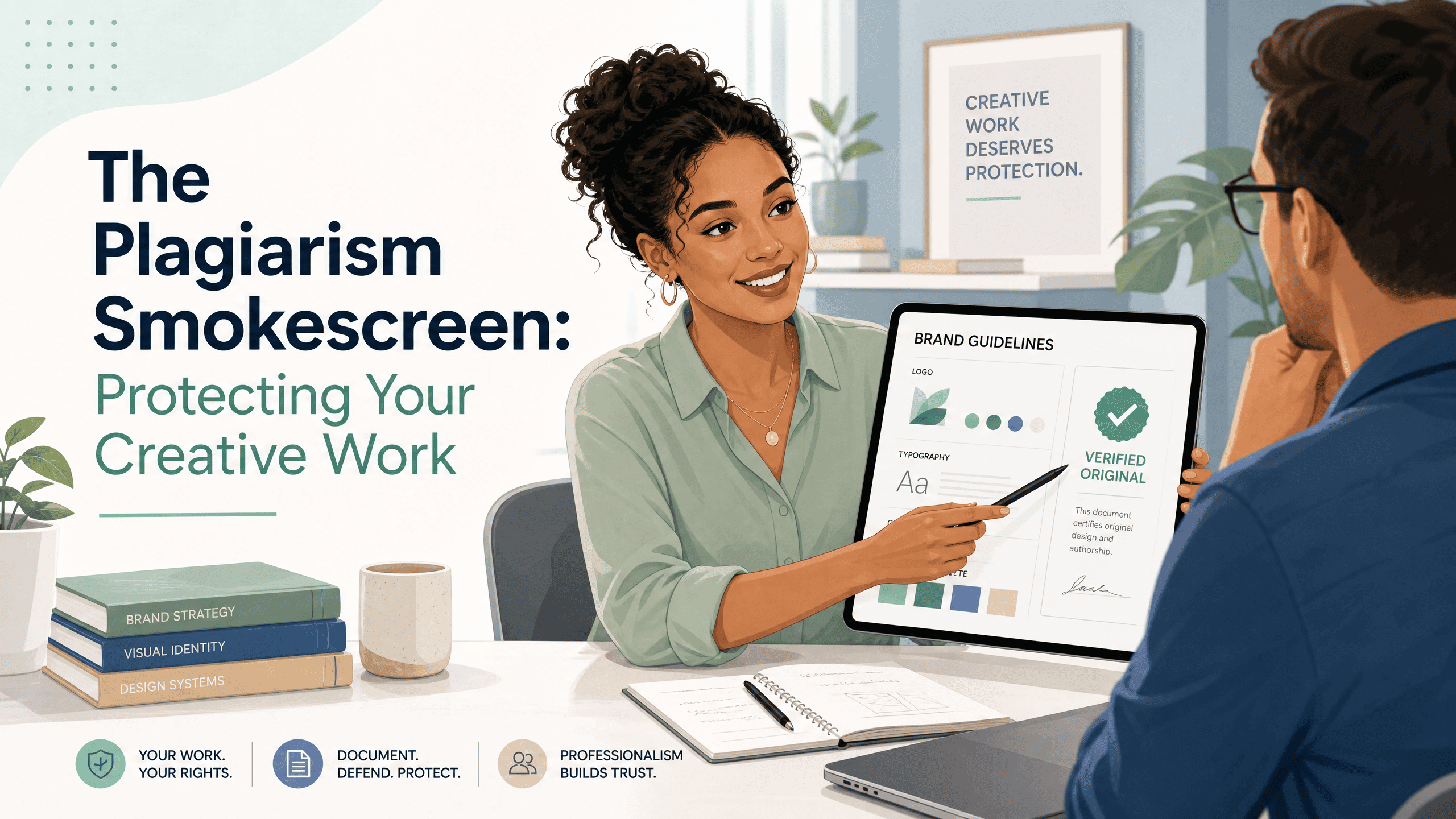
Did you know Non-payment is one of the most common disputes freelancers face globally ?
But that’s just the basic, surface-level statistic.
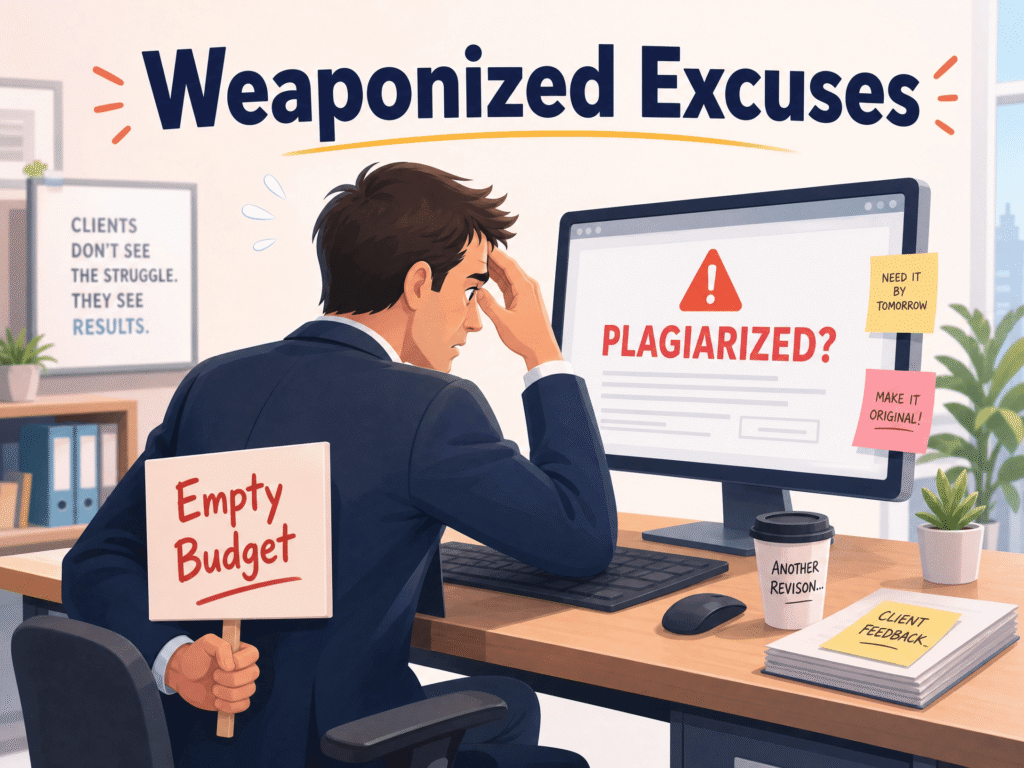
What nobody talks about in those friendly networking events is the weaponized excuse. The bad-faith dispute.
The client doesn’t just ghost you. They accuse you.
They look at the final, beautifully polished brand guidelines, panic about their own cash flow, and drop a bomb.
“This looks plagiarized,” they say. “We can’t pay for stolen work.”
Look, I’ve been there. My heart dropped into my stomach.
Imposter syndrome flared up immediately. I started questioning my own mood boards.
But sitting across the desk with my coffee, I realized something incredibly important.
This isn’t about your creative integrity. It never was.
It’s a cheap, predictable negotiation tactic designed to void a contract.
I am not a corporate PR bot, and I’m definitely not a boardroom lawyer speaking in Latin.
I’m someone who has navigated the messy, real-world trenches of creative business.
And when a client makes this claim to Avoid Paying the Final Invoice, you need a cold, calculated system.
I call it the Reverse Defamation Defense.
It’s a calm, meticulously defensive framework designed to shut down false claims without breaking a sweat.
Let’s break down exactly how you execute it.
Table of Contents
What to Do If a Client Claims Your Brand Guidelines Are Plagiarized
When a client uses a plagiarism accusation as a smokescreen to avoid payment, your goal is to transition from an “accused” to an “auditor.” Do not apologize, and do not offer a discount. Follow these steps immediately:
- Cease Emotional Responses : Do not panic or offer to “fix” the work for free, as this serves as a tacit admission of guilt.
- Demand Granular Proof : Immediately request that the client provide specific visual elements—such as exact hex codes, specific typography pairings, or layout dimensions—they believe are copied.
- Leverage Your Audit Trail : Respond by citing your documented creative process, including time-stamped drafts, sketch files, and mood boards that demonstrate independent creation.
- Reassert Payment Terms : Explicitly state that intellectual property rights only transfer upon receipt of the final invoice payment; therefore, any “infringing” work cannot be used by the client until the debt is settled.
- Escalate if Necessary : If the client continues to withhold payment while using your assets on a live project, treat the situation as an unauthorized use of intellectual property and initiate a formal recovery or DMCA process.
The Plagiarism Smokescreen
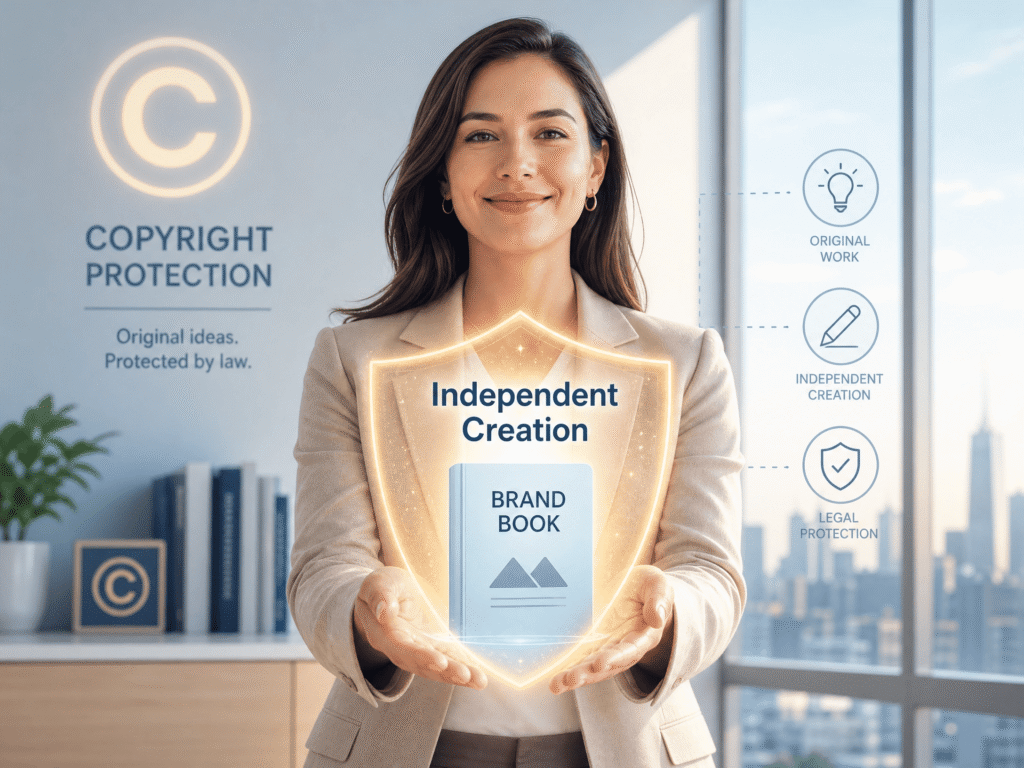
Why do clients pull this specific smokescreen ?
Usually, it comes down to poor financial planning on their end.
They want the completed deliverables, but they suddenly realize they cannot afford the final milestone payment.
So, they manufacture a crisis.
They know that accusing a creative professional of plagiarism is the fastest way to trigger panic.
The biggest mistake you can make right now is panicking and sending a highly emotional, defensive email.
When you apologize, backpedal, or over-explain, you give them ammunition.
The consequence ? You unintentionally validate their fake concern.
They will use your nervous energy as an admission of guilt to breach the contract.
Legally, this comes down to the burden of proof.
They are alleging a breach of contract based on intellectual property theft.
Under contract law, the burden is entirely on the party making the claim to prove it.
You don’t have to prove you are innocent. They have to prove you are guilty.
Here’s the thing about commercial design: brand guidelines share DNA.
There are only so many ways to lay out a typography hierarchy or structure a logo clear-space page.
Similarities in layout or style are completely inevitable.
But visual similarity is not legally defined as plagiarism.
According to the US Copyright Office (Title 17), copyright protects the specific expression of an idea, not the idea itself.
Two distinct brands can legally use minimalist layouts and similar sans-serif fonts.
The client’s fundamental mistake is confusing industry design trends with intellectual property theft.
The Case of Sarah’s 60-Page Deliverable
Let me tell you about a real scenario.
Sarah, a senior brand strategist I advised, spent two months building a comprehensive identity system.
She sent the final files. Then, absolute radio silence.
If this happens to you, your first step is knowing the exact follow-up timeline for late freelance invoices.
Four days later, Sarah got an email.
“The primary color palette and logo layout look exactly like a major competitor’s,” the client wrote.
“We are withholding the $8,000 final payment.”
She almost offered a 50% discount just to end the nightmare.
I stopped her.
We demanded they specify the exact hex codes and layout dimensions they claimed were copied.
They couldn’t. The client eventually paid in full when they realized we weren’t intimidated.
If your client starts ignoring your follow-ups after pulling a stunt like this, Here’s exactly what to do when a client ghosts after an invoice.
Documenting the Creative Audit Trail
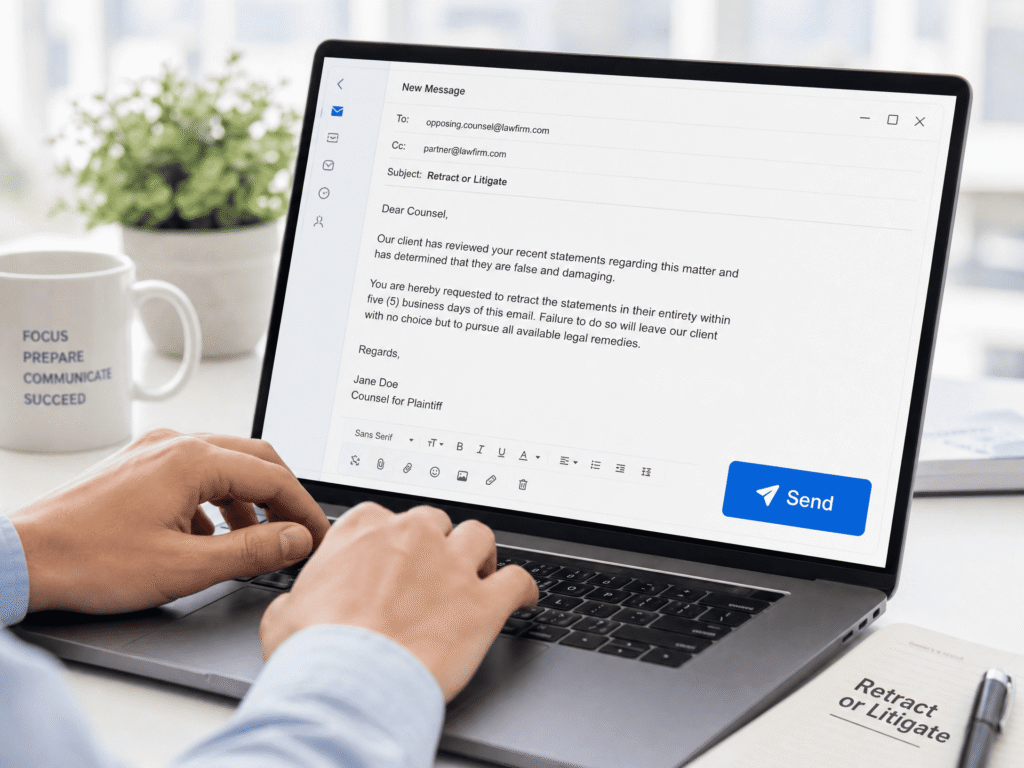
Your best defense actually happens long before the accusation.
It lives in your creative audit trail.
I never work in a vacuum anymore. Neither should you.
Every messy sketch, every discarded concept, and every raw vector file is a legal document.
If you don’t save your version history, you have absolutely no proof of your creative process.
The immediate consequence is a frustrating he-said, she-said argument.
In legal terms, proving the origination of the work significantly weakens their infringement claim.
Under the UK Copyright, Designs and Patents Act 1988, proving independent creation is a complete, ironclad defense.
this strongly supports your position.
Keep your ugly drafts. They are your alibi.
If the client is communicating these wild claims over text apps, you might wonder if it matters.
It does. You should absolutely know if a WhatsApp conversation is a legally binding contract.
The US Copyright Reality : Why You Already Own Your Work
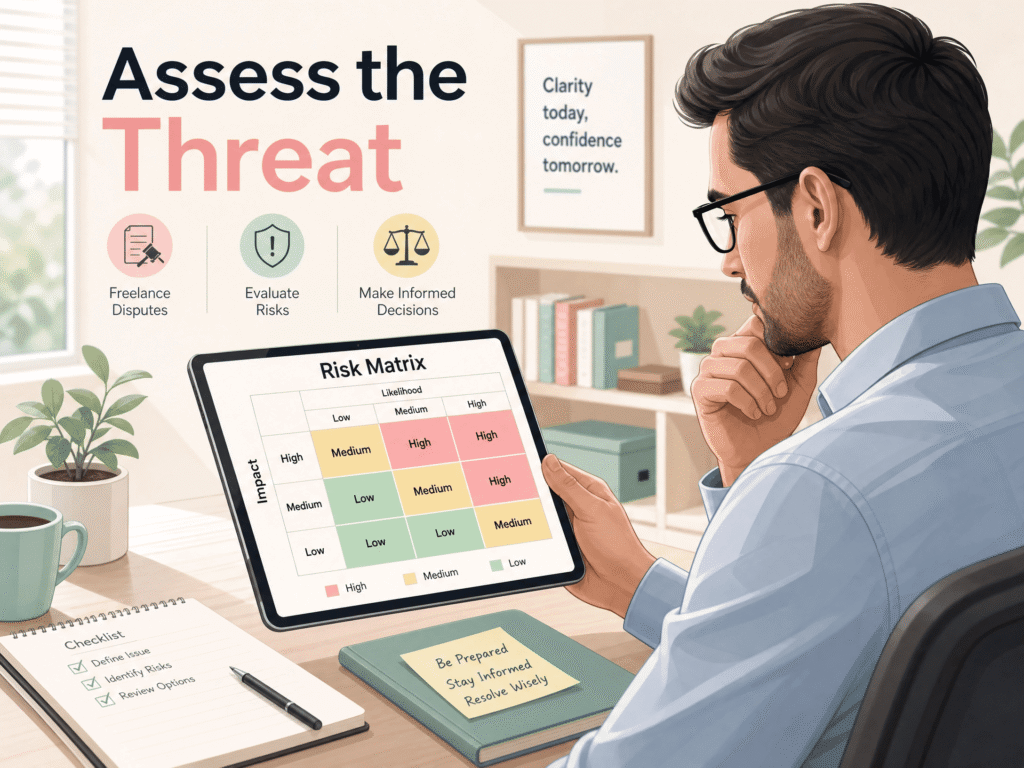
Let’s talk about US copyright law, because this is where freelancers usually get tripped up.
Clients often assume they can bully you just because you haven’t formally registered your deliverables with the government.
They are dead wrong.
Under the US Copyright Act, copyright protection exists the exact moment your work is fixed in a tangible medium.
You can verify this directly through the official US Copyright Office guidelines.
What does that actually mean for you?
It means the second you save that Figma file or export that PDF, you legally own it.
You don’t need to pay a fee or formally register a brand guideline to claim initial ownership.
Registration is really only required if you eventually decide to sue them in federal court for damages.
In the eyes of US law, your ultimate shield is the “independent creation” defense.
According to copyright frameworks outlined by Harvard University’s Office of the General Counsel, proving you independently created the work defeats infringement claims.
Even if your layout looks incredibly similar to a competitor’s, independent creation proves you didn’t steal it.
Your messy creative audit trail is your literal, undeniable proof of that independent creation.
But what if you are working with clients overseas ?
In India, under the Copyright Act of 1957, the exact same principle applies—registration is merely prima facie evidence, not a strict prerequisite for initial ownership. However, Indian commercial courts demand intense documentary evidence, heavily citing the doctrine of “passing off” in corporate disputes.
Whether you’re dealing with a tech startup in Austin or a global agency in Mumbai, the core defense remains completely identical.
Proof of independent creation neutralizes claims of plagiarism entirely.
If you frequently take on cross-border projects, you absolutely must understand how to protect yourself when working with international clients.
Mood Boards and Source Attribution Logs
How do you present this creative alibi to a hostile client ?
With meticulous source attribution logs.
When I build a mood board, I don’t just dump screenshots into a Figma file anymore.
I label them precisely.
“Reference for negative spacing.” “Reference for color weight.”
in this situation to Avoid Paying the Final Invoice, I pull up this log.
I show them the exact evolutionary chain of the concept.
Here is a simple visualization of how this creative flow works defensively :
Inspiration
Client-approved Pinterest board / Competitor analysis
Derivation
Wireframes exploring industry-standard layouts
Transformation
Applying unique typography, custom color math, and specific brand voice
Original Expression
The final, legally protected brand guideline deliverable
By showing this flow, you prove the work is transformative, not derivative.
Sometimes, this excuse is just the final stage of a project that has spiraled out of control.
If they kept asking for endless revisions before crying plagiarism, you need to prevent scope creep from eating your profits.
And if they actually launch the brand while refusing to pay?
That is literal theft. You must know what to do when a client uses your work without paying.
The ‘Retract or Litigate’ Response Template
Now, how do you reply to that dreaded email ?
You stay completely calm. You stay fiercely professional.
You do not get aggressive, and you definitely do not threaten them with a PR nightmare.
But you draw a hard, legally sound line in the sand.
I call it the “Retract or Litigate” response strategy.
First, you politely ask them to specify the exact, granular elements they claim are copied.
They almost never can.
Then, you remind them of the invoice terms they agreed to.
By the way, setting strong initial terms matters. Learn the difference between Net 15 vs Net 30 vs Net 45 payment terms.
Below is an interactive tool I designed for you.
Use this to generate a cold, professional response that forces their hand.
Interactive Response Generator
If they ignore this entirely, you don’t necessarily need an expensive attorney immediately.
Dynamic Response Generator
You can learn how to recover an unpaid invoice yourself without a lawyer.
But if they go rogue and steal your digital assets, you need to escalate.
In that case, here is how to write a clean cease-and-desist letter.
The Risk Matrix : Assessing the Threat Level
Not all client threats are created equal.
You need to evaluate their behavior logically, not emotionally.
Here is how I categorize the risk when a client plays the plagiarism card.
High Risk (Red Alert)
- They refuse to pay BUT they have already uploaded your assets to their live website or social media.
- They are actively using the “stolen” work to generate revenue.
- Action: Immediate Cease and Desist. Withhold all copyright transfers.
Medium Risk (Yellow Alert)
- They demand the raw Adobe Illustrator or Figma files so they can “verify” the work themselves.
- They are trying to get the source files to finish the job cheaper internally.
- Action: Refuse raw file handover until the invoice is settled. Send flattened PDFs only.
Low Risk (Green Alert)
- They complain loudly on a Zoom call but refuse to put the plagiarism accusation in writing.
- They are testing your boundaries to see if you’ll offer a quick discount.
- Action: Send the Retract or Litigate email. Force them to put it in writing. They will usually back down.
If this drags on, you might be legally entitled to compensation for the delay.
Check local laws to see if you can legally charge interest on late invoices.
The Bulletproof Evidence Checklist
If push comes to shove, you need an organized folder ready to go.
Never scramble for evidence after the fact.
If they force a legal dispute, this is exactly what you need to provide:
- Time-stamped raw files : Your Figma version history or Adobe Creative Cloud saved drafts.
- Approval checkpoints : Every email where the client explicitly approved the mood board or wireframes.
- The Inspiration Log : Your documented list of reference materials showing where your ideas originated legally.
- The Contract : Highlighting the specific clause that ties copyright transfer to final payment.
Without final payment, they do not own the work. Period.
If they drag it out for months, you need to know when it is officially time for a freelancer to take legal action.
Quick Decision Guide
Feeling overwhelmed ? Use this rapid decision tree.
Did they put the accusation in an email ?
- Yes: Reply using the Response Template above. Give them 48 hours to provide proof.
- No: Send an email summarizing the phone call. Force a paper trail.
Are they using the work publicly ?
- Yes: File a DMCA takedown notice against their website host immediately.
- No: Keep the final high-res files locked. Send heavily watermarked proofs only.
Did you sign a contract ?
- Yes: Point to the payment terms clause.
- No: Rely on default copyright law. You own the work until paid.
Frequently Asked Questions
Can a client legally keep my work if they claim it’s plagiarized ?
Absolutely not. If they genuinely believe it is plagiarized, they cannot legally use it anyway. Using it while refusing to pay proves their claim is in bad faith.
What if my design actually does look very similar to a competitor ?
Similarity happens. Unless you directly copied their source files or traced their exact proprietary logos, independent creation of similar layouts is generally protected.
Should I offer a discount to make them go away ?
Never. Offering a discount when accused of plagiarism looks like an admission of guilt. Stand your ground and demand they prove their claims.
Can they sue me for delivering “copied” work ?
Anyone can threaten a lawsuit, but proving it requires expensive litigation. If you have your creative audit trail, their lawyer will likely advise them to drop it.
Do I need to register my copyright before sending the invoice ?
No. In the US, UK, and India, your work is protected the moment you create it. However, registering it later can provide additional leverage in a severe court battle.
Look, dealing with a client who weaponizes your integrity to save a few bucks is exhausting.
It drains your creative energy and makes you question your worth.
But once you realize it’s just a predictable chess move, the fear disappears.
You stop reacting like a panicked artist.
You start responding like a seasoned business owner.
Document your process, guard your source files, and never apologize for the inevitable similarities of commercial design.
Stay calm. Stay defensive. Get paid.
About the Author :
Adv. Sagar Haribhau Shirsat is an active legal professional specializing in commercial transaction architectures, cross-border corporate compliance, and digital debt recovery systems. He designs strategic asset-protection and recovery frameworks that help freelancers, independent contractors, and global agencies defend their cash flow and enforce their billing rights.
Connect via his Official Professional LinkedIn Profile or About Us page .
Disclaimer : This guide is intended for educational purposes and risk management analysis. It does not replace formal legal counsel. For specific cross-jurisdictional contract disputes, always consult a certified attorney or local legal advocate.