
You wake up, grab your coffee, and check your inbox. There it is. The email you always dread but somehow always expect.
“Hey, we need to pause development for a bit while we close our next funding round.”
Your stomach drops. You instantly know what that means. The money is gone.
What should a developer do if a client runs out of money ?
Stop work immediately, secure intellectual property, send a formal notice, and negotiate structured recovery such as payment plans or equity conversion.
You’ve spent the last three months building an incredible MVP. You skipped weekends. You pushed code late into the night. Now, you’re staring at an unpaid invoice for $12,000, and the client’s runway has completely evaporated.
If you panic, you might lose everything. If you shut down the servers in a rage, you might even get sued.
Look, dealing with non-technical founders who out of capital mid-build is a rite of passage for freelance developers. I’ve been exactly where you are.
Remember that email—“we need to pause” ?
At that moment, most developers lose money. Now you know how not to be one of them.
I know the frustration of realizing the “visionary” you partnered with couldn’t manage a budget. I also know that if you play your cards right, you don’t have to walk away empty-handed.
This part still frustrates me even today.
Let me walk you through exactly how I handle this, step by step, without burning bridges or losing my mind.
Table of Contents
What Happens When a Client Runs Out of Money Mid-Project
We developers love logic. Code compiles, or it doesn’t. If statements have clear outcomes.
But startup finance ? It’s rarely logical. Non-technical founders often operate on pure optimism. They genuinely believe that next angel investor check is just a week away.
Until it isn’t.
When you realize the money has dried up, your first instinct is usually anger. You feel used. You might be tempted to restrict access to the codebase in an unauthorized way or lock them out of AWS.
Most developers lose money here — not because the client failed, but because they reacted instead of negotiating.
Here’s the thing: reacting emotionally is the fastest way to turn a bad financial situation into a legal nightmare.
I learned this the hard way a few years ago. Let me tell you about a project that almost broke my agency, and how it completely changed my approach to client insolvency.
Financial failure is rarely a sudden event but rather the culmination of mismanaged resources and shifting market dynamics. Here is an analysis of why 38% of startups succumb to cash depletion and poor planning, supported by recent data and industry reports.
1. The Critical 38% : Beyond the “Burn”
According to CB Insights and recent 2026 reports from Wilbur Labs, approximately 38% of startups fail because they run out of cash or fail to secure new capital. This figure represents the second most common cause of failure, trailing only a lack of product-market fit.
In the current 2026 economic landscape, the “funding winter” has persisted, with venture capital deal volumes down roughly 45% from their 2022 peaks.
This has created a “graduation gap” where startups that successfully raised Seed rounds struggle to reach Series A benchmarks, ultimately “starving” as their runway expires before they can prove a sustainable revenue model.
2. Poor Planning as a Structural Root
While “running out of money” is the final cause of death, the underlying disease is often poor financial planning and premature scaling.
Research from Startup Genome highlights that 74% of high-growth startups fail because they scale too quickly—hiring aggressive sales teams or spending on marketing before the product is fully optimized.
When a client runs out of money mid-project, most developers panic.
Furthermore, a widely cited U.S. Bank study found that 82% of small businesses that fail do so because of poor cash flow management.
This includes failing to account for seasonal dips, high customer acquisition costs (CAC) that exceed the lifetime value (LTV) of the customer, and a lack of weekly runway tracking, which Scaleup Finance identifies as a critical survival skill in 2026.
3. Cash as a Symptom of Market Misalignment
Many financial failures are actually “market-fit” failures in disguise.
As noted in Harvard Business School research by Professor Tom Eisenmann, cash depletion is often the final symptom of a startup building a product that nobody wants to pay for.
When a startup lacks a clear monetization strategy—a factor cited in 29% of failures—they are forced to burn through investor capital to maintain operations.
If a startup runs out of funding, your strategy must shift immediately.
In simple terms—most startups don’t fail suddenly. They bleed slowly until the cash runs out.
In 2026, the average failed startup burns through its reserves over 18–24 months before shutting down. Experts suggest that the most successful “10%” of survivors are those that treat financial discipline not as an administrative task, but as a strategic moat, maintaining at least 24 months of runway to weather market volatility.
Key Startup Survival Benchmarks (2026)
| Metric | Target/Benchmark | Impact of Failure |
| Financial Runway | 18–24 months minimum | 38% fail if this hits zero |
| Product-Market Fit | >40% user “must-have” score | 35-42% fail without this |
| Team Stability | High co-founder alignment | 23% fail due to team conflict |
| Scaling Pace | Post-profitability or high retention | 74% fail due to premature scaling |
Case Study : The “Next Uber for Real Estate” Disaster
A few years back, I took on a project with a charismatic founder named Mark. Mark was brilliant at pitching, but he had zero technical background.
He was building a prop-tech platform. The initial scope was clear, and his initial deposit cleared my bank account the same day.
For the first two months, things were great. But then, the scope started creeping. Mark wanted AI integrations before we even had a functional login system.
I should have stopped right then. I should have read my own guide on how to stop working for free and prevent scope creep. But I wanted to be a “good partner.”
By month three, my final $15,000 invoice was due. Mark asked for a “few more days.” Then a week.
Eventually, I realized my client ghosted me after I sent the invoice.
Who Owns the Code If Client Doesn’t Pay ?
When Mark finally called me, he broke down. He admitted he spent the remaining development budget on a PR agency to drum up hype.
He had a half-finished app, zero cash, and a massive invoice he couldn’t pay. I had a choice.
I could sue him. But you can’t get blood from a stone. Lawsuits take months, and if the LLC is bankrupt, you just waste money on legal fees.
Instead, I took a deep breath and decided to get creative. I didn’t want to just write off fifteen grand.
Can You Stop Work If a Client Can’t Pay ? (Legal View)
I realized that restricting access to the codebase in an unauthorized way wasn’t a strategy; it was a reaction. I needed leverage, not revenge.
Honestly, I didn’t “develop a framework” that day. I just didn’t want to lose ₹12 lakh and tried something different.
I pivoted the conversation from “when will you pay me” to “how do we restructure this debt so we both win.”
It worked. And I’m going to show you exactly how to do it.
The Reality when client runs out of money
To fix the problem, you have to understand how we got here. Non-technical founders fail to budget for the “invisible” costs of software development.
They budget for the UI design. They budget for marketing. They rarely budget for server costs, API fees, or the inevitable bugs that require extra dev hours.
They operate on best-case scenarios. When things take 20% longer, their cash runway vanishes.
The Warning Signs You Probably Missed
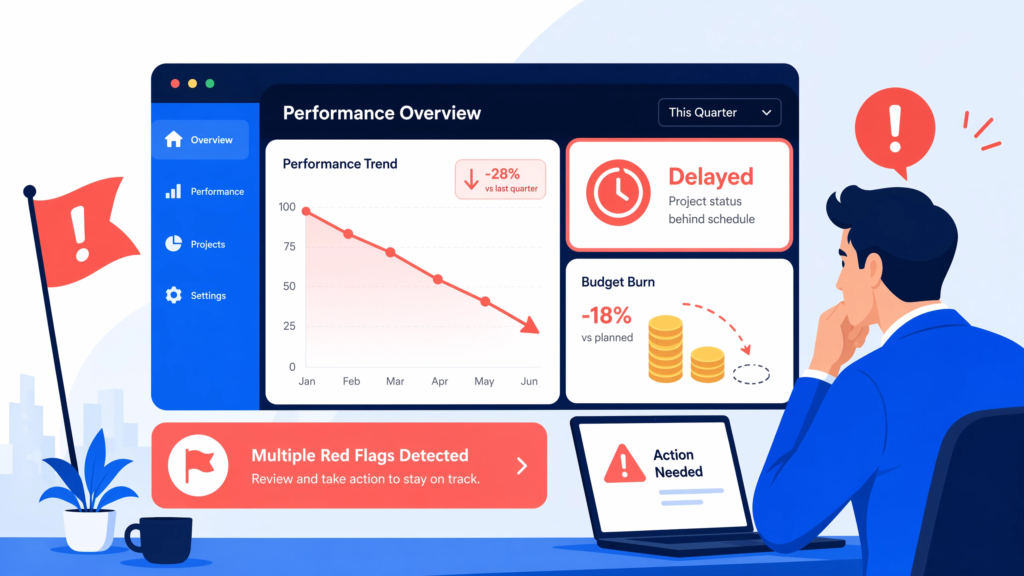
Looking back, there are always red flags before the money stops.
- Delayed feedback : They stop replying to Slack messages quickly because they are stressed about fundraising.
- Micromanaging cheap things : Suddenly arguing over a $50 SaaS subscription.
- The “Net Terms” dance : Asking to push payments back. You need to know the difference between Net 15 vs. Net 30 to protect your cash flow early on.
- Sudden pivot to investor pitches : They care more about the pitch deck than the staging server.
When you see these signs, you need to initiate an exact follow-up timeline for late invoices immediately. Don’t wait.
Can a developer stop work if client doesn’t pay ?
Yes. A developer can legally pause work if payment terms are breached, provided proper notice is given and contract terms support suspension.
Securing IP When the Runway Ends

When the capital runs out, your biggest asset is the intellectual property. Who actually owns the code you just wrote ?
If you used a solid independent contractor agreement, the IP usually transfers only upon full payment.
According to the US Copyright Office, independent contractors generally retain the copyright to their work unless there is a signed “work made for hire” agreement.
If they haven’t paid you, you still own the code.
Legal Options If a Client Uses Your Code Without Paying – DO NOT DELETE anything
Your leverage lies in your ownership. If you delete the production database, you cross the line from a breached contract into digital unauthorized system interference.
You could face criminal charges under acts like the Computer Fraud and Abuse Act (CFAA) in the US.
Instead, securely back up everything. Document the exact state of the project at the moment development stopped.
If they try to take the unfinished code and give it to a cheaper developer, you have legal options. You need to know exactly what to do when a client uses your work without paying.
If they push it live, you might even need to draft a clean cease-and-desist letter to protect your rights.
The Equity-vs-Cash Pivot Framework

This is the core strategy for dealing with non-technical founders who out of capital. It’s a pragmatic way to secure your financial future when cash is gone.
You need to shift from being a vendor to acting like an early-stage debt holder.
Phase 1 : The Formal Pause
First, formalize the stop. Send an email stating that development is officially paused due to non-payment.
Do not be aggressive. Be clinical. State the facts, the outstanding balance, and the current state of the deliverables.
Phase 2 : Assess Founder Competence
Let me be honest with you. Not every startup is worth saving.
Before you agree to alternative payment terms, you must evaluate the founder.
Are they broke because of bad luck, or because they are incompetent? If they are incompetent, cut your losses, secure the code, and walk away.
If they are smart, resilient, and just hit a funding speedbump, proceed to Phase 3.
Phase 3 : The Pivot Menu
Get on a call. Tell them you want to see them succeed, but you can’t work for free. Present them with three options.
- Option 1 : The Payment Plan. Spread the remaining balance over 6 months, with a 10% premium for the risk.
- Option 2 : The License Model. You retain full IP ownership and license the MVP to them monthly.
- Option 3 : Debt-to-Equity Conversion. Convert the unpaid invoice into a Convertible Note.
Converting Unpaid Invoices into Convertible Notes
This is my favorite tactic when dealing with founders who are out of capital but actually have a good product idea.
A Convertible Note is short-term debt that converts into equity during a future pricing round.
I’ve seen this go wrong more times than I can count.
Instead of fighting over $10,000 today, you turn that $10,000 into an investment in their company.
How It Works
You draft a simple legal agreement. The startup acknowledges they owe you the money.
If they raise funding in the next 18 months, your debt converts into shares at a discounted rate (usually 20% off the investor price).
If they don’t raise funding, the debt becomes due, often with interest.
Why Founders Love This
It cleans up their balance sheet. Having massive unpaid vendor debt scares away angel investors.
Converting that debt to a note shows investors that the developer believes in the project enough to take equity.
It aligns your incentives with theirs. Suddenly, you aren’t an angry freelancer; you are an early-stage investor.
If you are dealing with a small balance, you might be wondering how to recover an unpaid invoice yourself without hiring a lawyer. Setting up a basic promissory note is often something you can negotiate directly.
The Exit Handover Agreement

Sometimes, you just need to walk away. The founder is out of money, out of ideas, and out of time.
Even in this scenario, you must protect yourself from future liabilities. You need an Exit Handover Agreement.
This is a simple contract that finalizes the end of the relationship.
What to Include
- Debt Acknowledgment : The client formally agrees they owe you $X.
- Code As-Is : They accept the current codebase “as is” with no warranty, since they stopped paying.
- IP Release : Specify exactly what happens to the IP. Do you keep it? Do they get a restricted license?
- Non-Disparagement : A mutual agreement not to trash each other on LinkedIn or Twitter.
Never improperly block system or server access. It is illegal and unethical.
Instead, zip the code, dump the database, and send it to them via a secure link that expires in 7 days.
Give them written notice that you will be shutting down your AWS/DigitalOcean staging servers in 14 days to stop incurring costs.
According to the Cornell Legal Information Institute on Contract Law, providing reasonable notice mitigates your liability if their business suffers from the shutdown.
The Evidence Checklist
If things go south, your documentation is your armor. Keep this checklist handy when dealing with founders who run out of capital.
- The Original Contract : Signed and dated.
- Scope of Work (SOW) : Detailed feature lists and acceptance criteria.
- Git Commit Logs : Proof of the work you actually did.
- Time Tracking Sheets : Detailed logs of your hours.
- Written Approvals : Emails or Slack messages where they approved features.
- Invoices & Payment History : Showing what was paid and what wasn’t.
- The “Pause” Communication : Your formal notice that work stopped.
By the way, even informal chats matter. You’d be surprised to learn if a WhatsApp conversation can be a legally binding contract in many jurisdictions. Save those screenshots.
Risk Matrix : Client Insolvency
How do you know how much danger you are in ? Use this matrix to assess your risk level when a client goes broke.
| Scenario | Risk Level | Your Immediate Action |
| Client communicates early, asks for a payment plan. | LOW | Draft a formal payment schedule. Keep IP until paid. |
| Client ghosts you, but the code is still on your servers. | MEDIUM | Send a formal pause notice. Lock staging access securely. |
| Client demands full code handover without final payment. | HIGH | Refuse politely. Cite contract terms regarding IP transfer. |
| Client takes your code, gives it to another dev, refuses to pay. | SEVERE | Send a Cease & Desist. Prepare for small claims or litigation. |
United States Jurisdictional Realities
If you are a remote developer or agency owner contracting with US-based startups, dealing with non-technical founders who run out of capital is an uphill battle.
The Corporate Shield
In the US, company structures like LLCs and C-Corporations offer ironclad protection to founders. This statutory concept of limited liability completely shields a founder’s personal assets. If an undercapitalized Delaware entity defaults on your invoice, suing it from abroad is generally a dead end.
The Bankruptcy Bottom Line
When a cash-strapped US startup goes under, it typically faces formal liquidation. Under federal Chapter 7 bankruptcy basics, the court sells remaining corporate assets to pay off debts. Unfortunately, independent contractors are classified as unsecured creditors—placing you at the absolute bottom of the payout line.
U.S. Bankruptcy Court, District of Nevada
The Reality Check : Chasing an empty, dissolved US entity across state lines costs significantly more in cross-border legal fees than the value of the unpaid invoices. Your best defense is prevention.
The Cross-Border Alternative : UK & India Realities
Different international jurisdictions provide varied levers. In the United Kingdom, you can issue an official statutory demand for undisputed debts over £750. If the client fails to settle or dispute it within 21 days, you have the legal right to petition the court to wind up their company entirely.
Meanwhile, inside India, domestic developers registered under the MSMED Act of 2006 gain intense statutory leverage for delayed payments. The framework mandates that corporate buyers must settle invoices within 45 days, or face mandatory compounded interest penalties at three times the prevailing RBI bank rate.
Project Pause Email Generator
Sometimes finding the right words is the hardest part. I built this simple HTML visualizer to show you the exact structure of a professional “Project Pause” email.
(You can copy this template or download a clean version for reuse. . Feel free to copy this exact wording. It’s firm, professional, and leaves the door open for negotiation.)
Quick Decision Section
Feeling overwhelmed ? If you are dealing with a broke founder right now, follow this 60-second decision tree.
- Is the invoice over 15 days late ?
- Yes: Stop all new coding immediately.
- Is the code hosted on your servers or theirs ?
- Mine: Good. You have leverage.
- Theirs: Revoke your own push access to avoid liability, but do not delete their databases.
- Is the founder communicating ?
- Yes: Pitch a Convertible Note or a payment plan.
- No: Send a final notice email and prepare an Exit Handover Agreement.
Frequently Asked Questions (FAQs)
Should I lock the founder out of their AWS account if they don’t pay ?
Absolutely not. If the AWS account is in their name, locking them out is considered unauthorized access. You can be sued for business interference or face cybercrime charges. Only restrict access to infrastructure that you personally own and pay for.
What is the best way to approach dealing with founders who run out of capital but want me to keep working for equity ?
Never accept straight equity in place of cash for past work unless it’s structured properly. A standard equity grant forces you to pay taxes on shares that are currently worthless. Always use a Convertible Note or a SAFE agreement to defer the tax burden.
Can I take the code I wrote for them and sell it to someone else ?
It depends entirely on your contract. If you signed a “Work Made For Hire” agreement, they own it even if they haven’t paid (though you can sue for breach of contract). If you used a standard contractor agreement, you likely own the IP until final payment is cleared. Consult a lawyer before reselling.
How long should I wait before sending a project pause email ?
Do not wait. If an invoice is more than 3 to 5 days past a strict Net-15 or Net-30 deadline, send a polite but firm notice. Developers who wait 60 days out of “politeness” are the ones who lose the most money.
Will an NDA prevent me from using this failed project in my portfolio ?
Generally, yes. Standard NDAs restrict you from publicly sharing the code or the business logic. However, you can ask the founder to sign an amendment allowing you to display anonymized screenshots in your portfolio in exchange for waiving late fees.
If you’re currently dealing with a client who ran out of money mid-project, stop coding today and follow the 3-step recovery framework above before responding emotionally.
Final Thoughts
Dealing with founders who run out of capital is stressful. It tests your patience, your bank account, and your sanity.
But look, it’s also a masterclass in business negotiation.
You aren’t just a code monkey typing on a keyboard. You are a business owner. When a partner goes broke, you don’t throw a tantrum. You secure your assets, assess the risk, and negotiate a pivot.
Sometimes you get your money later. Sometimes you get equity that turns into a massive payout. And sometimes, you just get a very expensive lesson in writing better contracts.
Stay calm. Document everything. Protect your code. And never, ever work for free.
About the Author
Adv. Sagar Haribhau Shirsat is an active legal professional specializing in commercial transaction architectures, cross-border corporate compliance, and digital debt recovery systems. He designs strategic asset-protection and recovery frameworks that help freelancers, independent contractors, and global agencies defend their cash flow and enforce their billing rights.
Connect via his Official Professional LinkedIn Profile or About Us page.
Disclaimer : This guide is intended for educational purposes and risk management analysis. It does not replace formal legal counsel. For specific cross-jurisdictional contract disputes, always consult a certified attorney or local legal advocate.