Client Used My Design Without Paying ? Here’s Exactly What to Do
You are sitting on your couch, mindlessly scrolling through Instagram. A familiar post catches your eye. You stop scrolling.
Your stomach drops. Staring back at you is the exact logo concept your client rejected three weeks ago.
They told you it “wasn’t aligning with their vision.” They said they were going in a “different direction.”
If a client used your design without paying, you are not alone—and more importantly, you still legally own the work.
Here’s where most freelancers lose control…
Look, I have been there. Back in 2018, I watched a client launch a whole digital campaign using a branding package they explicitly turned down. I felt sick, angry, and honestly, a bit foolish.
But I took a breath. And you need to take one, too.
You might feel like you just got robbed. The reality is much calmer. By doing this, they’ve actually handed you total legal leverage.
Here is the thing about the creative business world: clients often test boundaries. Sometimes it is sheer ignorance. Sometimes it is deliberate theft.
Either way, you are not powerless here. We are going to fix this, calmly and methodically.
If you are wondering what to do when a client uses your work but refuses to pay you, the answer is not a screaming match. It is a calculated, legally grounded response.
You do not need a boardroom lawyer yet. You just need to understand the basic mechanics of intellectual property and digital leverage.
Table of Contents
Let’s walk through the exact playbook I use to protect my own creative business. We will turn this frustrating situation into a paid invoice.
Quick Answer: What to Do when Client Uses Your Design Without Paying ?
If a client uses your design without paying, they do not own the copyright. As the creator, you retain full rights under the Berne Convention. You can either send a retroactive licensing invoice or file a takedown request through platforms like Instagram or under the Digital Millennium Copyright Act.
Who Owns the Design If the Client Didn’t Pay ?
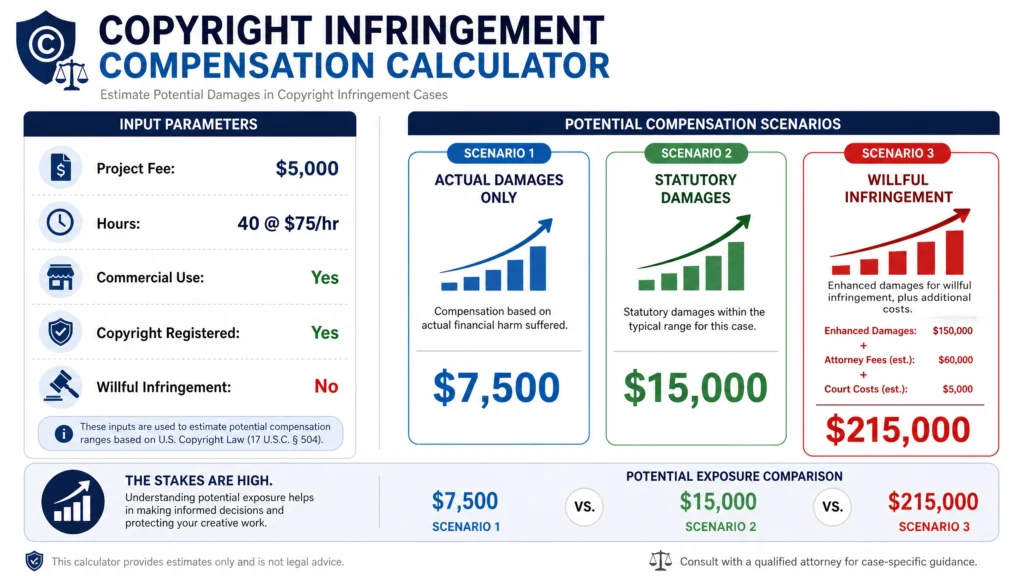
To handle this, we need to understand exactly who owns what.
Non-lawyers often overcomplicate copyright. It is actually incredibly straightforward when you strip away the jargon.
In simple terms, the second you create it, it’s yours , draft a vector, or export a PNG, you own the copyright. This is guaranteed globally by the Berne Convention, an international treaty governing copyright.
You do not need to register a logo to own it. Creation equals ownership.
A client only gains ownership when you explicitly transfer the rights to them. This usually happens upon full and final payment.
If the client rejected your concept, no transfer of rights occurred. Their rejection is your shield.
Sometimes clients think paying a deposit gives them an “implied license” to use whatever you send them. This is entirely false.
A rejected concept is an explicitly canceled transaction for that specific piece of intellectual property.
Even if they rejected the design over a casual text, that matters. I always remind freelancers to ask: can a WhatsApp chat count as a legally binding contract? Yes, it absolutely can.
If they said “We pass on this logo” in a chat, they legally terminated their right to use it.
When they subsequently upload it to Instagram, they are committing copyright infringement. Plain and simple.
And honestly, this is the part that frustrates most freelancers the most.
This likely constitutes copyright infringement under applicable law.
Immediate Evidence Preservation (Social Archiving)
Before you send a single text, email, or invoice, you must secure the perimeter.
Do not confront them yet. If you tip them off, they might delete the Instagram post.
If they delete it before you gather evidence, it becomes your word against theirs. We need undeniable proof.
Take screenshots immediately. Capture the Instagram post, their profile, the caption, and the date it was posted.
Also, capture any comments proving it is being used commercially. If people are saying “Love the new logo!” and the client says “Thanks!”, screenshot it.
Next, use an objective third-party archiving tool. Websites like the Wayback Machine or Archive.today can capture the live URL.
This prevents the client from claiming you photoshopped the screenshots later.
Gather your internal paper trail, too. Find the exact email or chat where they rejected the logo.
Save the original Adobe Illustrator or raw design files showing the creation metadata. This proves you are the original author.
Now this is where things get interesting…
Organize all of this into a single, clean folder. This is your leverage.
With your evidence locked down, you are ready to prepare a clean cease-and-desist letter if a client steals your designs. But we will try invoicing first.
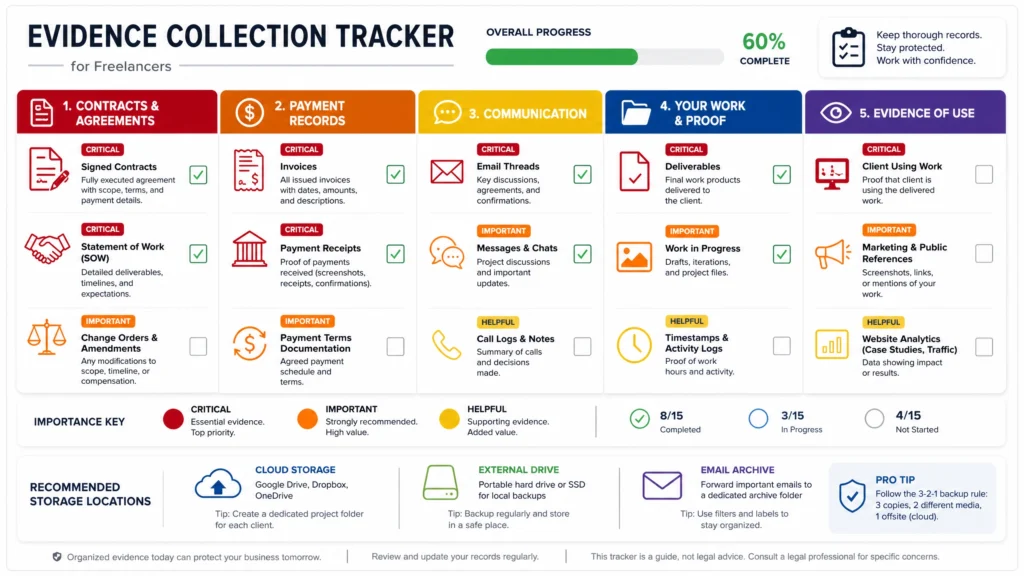
The Evidence Gathering Checklist
- Original Source Files : Locate the AI, PSD, or SVG files with original timestamp metadata.
- The Rejection Record : Save a PDF of the email or message where they explicitly rejected the work.
- Live Capture : Use an archiving service to log the Instagram post URL.
- Visual Proof : Take wide screenshots showing the logo on their profile, alongside the date.
- The Original Contract : Keep your terms of service handy to reference IP clauses.
What to Do If a Client Used Your Design Without Paying
Now, we shift from defense to offense. We approach this as a business transaction, not a crime scene.
They are using your logo commercially. Therefore, they owe you a licensing fee.
Do not ask them to take it down immediately. Instead, offer them the chance to legitimize their use of your IP.
Draft a new invoice. Do not use the old invoice from the rejected project.
Title this new invoice “Retroactive Commercial Licensing Fee.”
In the creative industry, retroactive licensing for unauthorized use usually carries a multiplier. It is common to charge 2x or 3x your normal rate.
Why? Because they bypassed the approval process and used the work without a negotiated agreement.
However, keep the fee realistic. If you just want to get paid your original rate, stick to that. The goal is friction-free payment.
If you want to know how to design an invoice that accounts payable teams can’t ignore, keep it brief and professional.
Send the invoice with a calm, neutral email.
Say something like: “I noticed you decided to move forward with Concept B on Instagram. Attached is the licensing invoice to officially transfer the rights to your company.”
By framing it this way, you give them a graceful way out. They can pay the invoice and pretend it was a simple misunderstanding.
If they ignore this email, you move to the next phase. My client ghosted me after I sent the invoice—what do I do now? You escalate.
The Licensing Email Generator
You can use this simple HTML template logic to draft your first outreach. It removes the emotion and sticks to the facts.
Case Details
1. The Licensing Email
2. Pre-Send Tactical Checklist
- Awaiting case details…
The Social Media Takedown Hack
If the client refuses to pay, or gets hostile, the gloves come off.
You hold the trump card : The Digital Millennium Copyright Act (DMCA).
Under the DMCA Section 512, platforms like Instagram are legally required to remove infringing content quickly. If they do not, the platform itself becomes liable.
Instagram does not want to get sued over your logo. They will side with the copyright holder.
You do not need a lawyer to file a DMCA takedown. You can do it directly through Instagram’s Intellectual Property reporting form.
This is highly effective. A platform strike can severely damage a brand’s social media presence.
In many cases where a client used your design without permission, the issue is not just payment—it’s unauthorized commercial use.
When you file, provide the link to their post. Then, provide a link to your original portfolio or a cloud drive showing your original dated files.
Explain briefly: “I am the creator. The user rejected this design, did not pay for it, and is using it without authorization.”
Instagram usually processes these requests within 24 to 48 hours.
Once the image disappears from their feed, the client will usually panic. Their marketing campaign just got a black eye.
Suddenly, your invoice will look very reasonable to them.
This tactic is similar to a developer’s strategy. Think about a client not paying after website migration; you use the platform’s rules against them.
If they reach out angrily after the takedown, remain perfectly calm.
Tell them the takedown is a standard automated legal procedure for unpaid IP. Inform them you will retract the claim once the invoice is paid in full.
This is exactly how to recover an unpaid invoice yourself without hiring a lawyer. You leverage the infrastructure around them.
Problem → Law → Solution
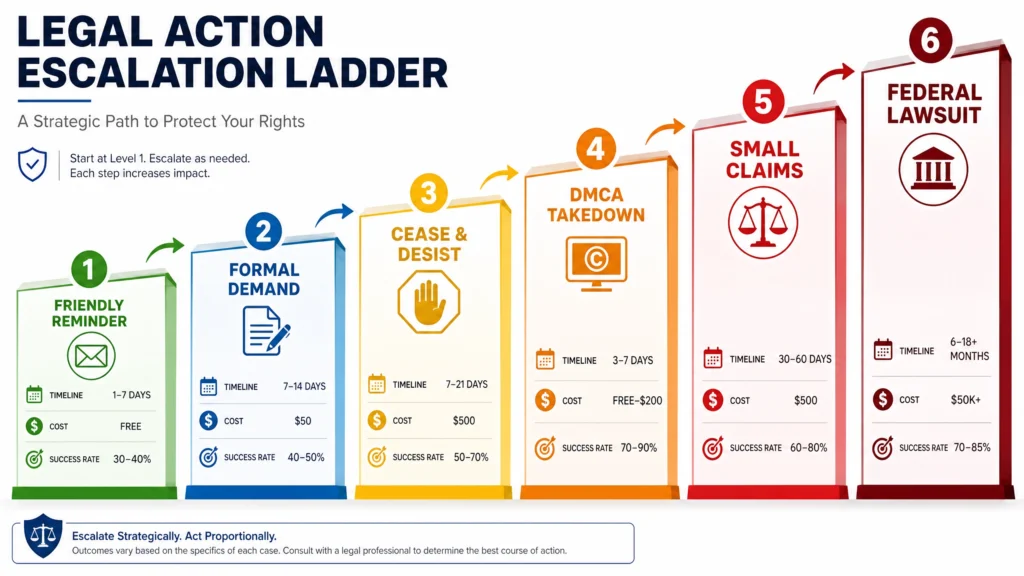
Let’s map out the exact progression of this strategy. Do not skip steps.
Most freelancers make the mistake of confronting the client before securing evidence — which destroys their leverage.
- Problem Identified : Client posts rejected logo on Instagram.
- Evidence Secured : Freelancer archives links, takes screenshots, and locates original files.
- The Law Applied : Freelancer relies on automatic copyright creation. No payment = No rights transfer.
- Soft Solution : Freelancer sends a retroactive commercial invoice, offering a polite way out.
- Hard Solution : If ignored, freelancer executes a DMCA takedown via Instagram.
- Resolution : Client pays to restore content and legally acquire the asset.
Real-World Case Study : The “Accidental” Rebrand
Let me share a scenario from a junior designer I recently advised. Let’s call her Maya.
Maya designed a beautiful, minimalist logo for a boutique coffee shop. The owner rejected it, saying it was “too modern.”
They paid Maya her 50% kill fee, and they parted ways.
Two months later, Maya saw the exact logo on the coffee shop’s new branded Instagram posts.
Maya panicked. She wanted to blast them publicly on Twitter. I told her to stop immediately.
Instead, we gathered the screenshots. We dug up the email where the owner explicitly said, “We are rejecting this design.”
Maya sent a polite email with a new invoice. She charged her full rate, plus a 50% retroactive fee.
Honestly, this is where things get a bit annoying
The owner replied defensively, claiming they “paid the kill fee, so they owned the sketches.”
We calmly explained the US Copyright Office Work Made for Hire rules. A kill fee covers time spent, not IP ownership, unless the contract says otherwise.
We gave them 48 hours to pay before filing an Instagram IP claim.
The owner paid the invoice the next morning. Maya got her money, kept her professionalism, and protected her rights.
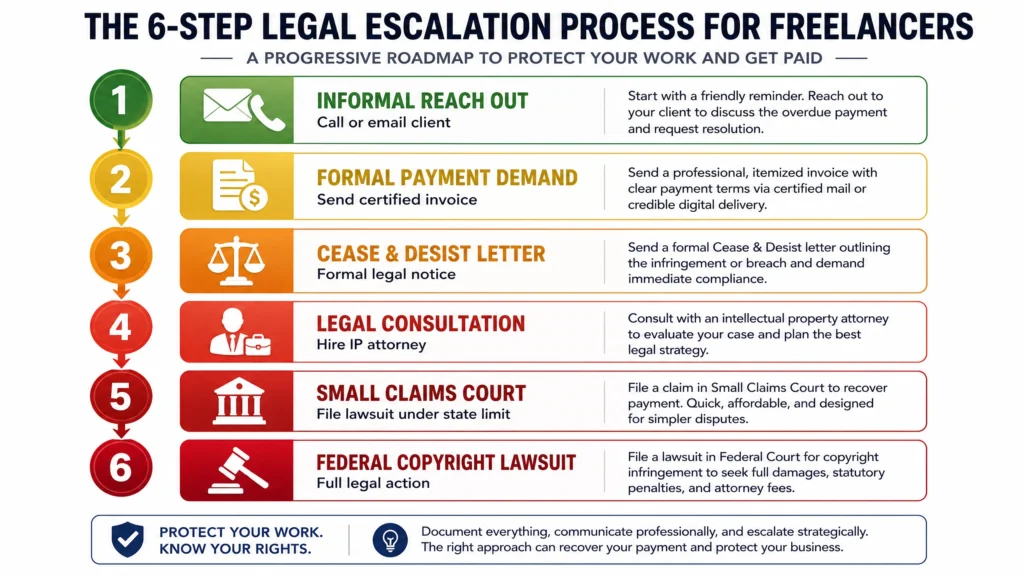
If you are wondering when it is officially time for a freelancer to take legal action, the answer is : only after these leverage tactics fail. Usually, they work.
Global Context : India vs Global Copyright Frameworks
Many freelancers work across borders. You need to understand how the rules shift depending on your client’s location.
Whether you are in Mumbai or Manhattan, the core principles of copyright remain surprisingly similar due to global treaties.
However, enforcement mechanisms vary slightly.
Jurisdiction Risk Matrix
| Region | IP Ownership Default | Takedown Mechanism | Freelancer Risk Level |
| United States | Creator owns until explicitly transferred. | DMCA Notice. Fast, highly effective. | Low. Strong platform compliance. |
| United Kingdom | Creator owns, but employment nuances exist. | Notice and Takedown (UK Law). | Low. Courts favor original authors. |
| India | Under Section 17 of Copyright Act 1957, author is first owner. | Grievance Officer Reporting (IT Rules). | Medium. Slow legal system, but platforms act fast. |
| EU (General) | Strong moral rights for creators. | DSA (Digital Services Act) removals. | Low. Heavy penalties for corporate theft. |
In India, copyright is automatically granted to the creator, just like in the US. You do not need a copyright registration certificate to enforce your rights against a local client.
However, the Indian legal system can be notoriously slow for small civil disputes.
Therefore, relying on platform-level takedowns (like reporting to Instagram India’s Grievance Officer) is your best immediate strategy.
Do not waste time threatening a lawsuit in a jurisdiction where small claims courts are backlogged. Hit them where it hurts: their social media presence.
Is It Legal for a Client to Use a Rejected Logo ?
In short : Absolutely not.
Copyright law is incredibly clear on this. The moment you create a design, you own the copyright. The only way a client legally gains the right to use that design is if you explicitly transfer the rights to them.
But here’s the part clients don’t expect…
And yeah, this part is not fun.
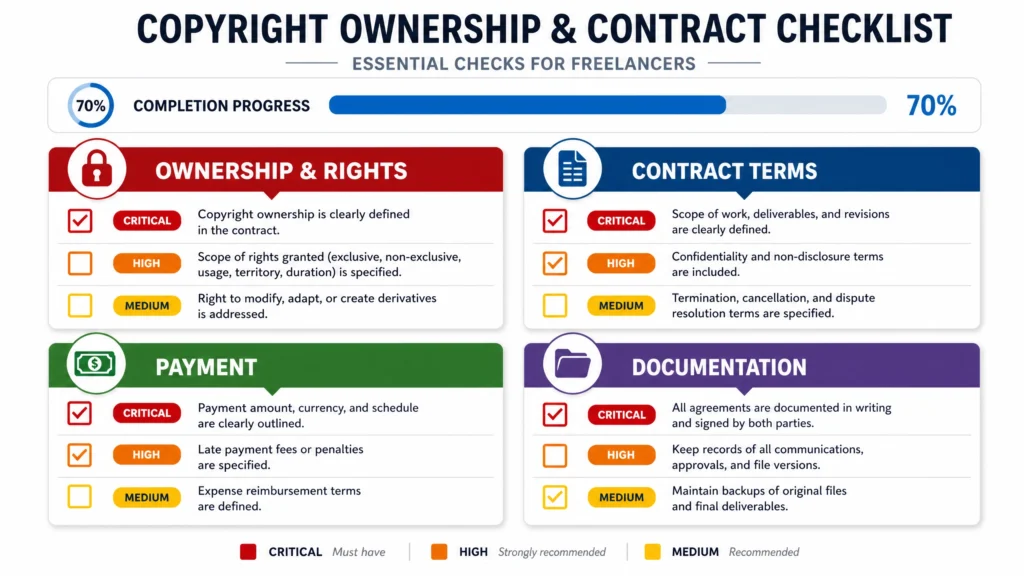
When a client rejects a concept, they are explicitly declining to purchase those rights. They cannot pass on a design to avoid paying for it and then quietly upload it to their social media or website later. Without a signed transfer or a paid final invoice, their use of the rejected logo is clear-cut copyright infringement.
Can a Client Use Your Design If They Only Paid a Deposit ?
Almost never. A deposit is an industry-standard mechanism to reserve your time in the schedule and cover the initial labor of discovery, drafting, and ideation. It is not a purchase of intellectual property.
Unless your contract has a highly unusual clause stating that the deposit grants them partial or full usage rights (which it shouldn’t), the IP remains 100% yours until the final invoice is paid in full. They paid for the process of working with you, but the final asset hasn’t been legally handed over yet.
What to Do When They Use Your Work Without Permission
If you find yourself in this situation, do not immediately fire off an angry text or put them on blast on social media. You want to outsmart them, not fight them. Here is the playbook.
1. Lock Down the Evidence
Before you say a single word to the client, take screenshots. Capture their website, Instagram grid, Facebook header, or wherever the design lives. Make sure dates, URLs, and timestamps are visible. Use an archiving tool like the Wayback Machine if it’s on a website. If you confront them first, they might delete the post and deny everything, leaving you without leverage.
2. Review Your Paper Trail
Double-check your emails and your contract. Find the exact message where they said, “We are going in a different direction,” or confirm the date the final invoice went unpaid. You want absolute certainty that the IP transfer was never completed.
3. The “Benefit of the Doubt” Invoice
Never assume malice when ignorance is a possibility. Many clients genuinely do not understand how copyright or licensing works. Reach out with a calm, strictly professional email. Do not accuse them of stealing; instead, offer them a path to legitimize their mistake.
Send a message along the lines of:
“Hi [Name], I noticed you decided to move forward with Concept B on your social media. I’m glad you ended up loving the design! Since this concept was previously rejected (or the final balance remained unpaid), the IP rights were never officially transferred. To ensure your business is using the branding legally, I’ve attached the licensing invoice to officially transfer the copyright over to you.”
This approach removes the hostility. It gives them a graceful way to pay you and pretend it was just an administrative oversight.
4. Execute a Takedown
If they ghost you, argue, or refuse to pay, the gloves come off. Because you own the copyright, you have the authority to issue a DMCA (Digital Millennium Copyright Act) takedown notice—or its local equivalent—to the platform hosting the content.
Whether it’s Instagram, Facebook, or a website host like Shopify, platforms are legally obligated to remove infringing content to protect themselves from liability. Filing an IP claim through a platform’s reporting tool is usually fast and free. Once their shiny new branding suddenly vanishes from the internet, they usually realize you aren’t bluffing, and the invoice gets paid very quickly.
Would it be helpful to draft a specific, ready-to-send email template or a formal cease-and-desist letter tailored to your exact situation?
Handling the Pushback
Clients will rarely admit they were wrong. They will try to gaslight you.
They might say, “We only used it for a small Instagram post, it’s not a big deal.”
Do not fall for this. Commercial use is commercial use. Whether it is on a billboard or an Instagram story, it is unauthorized publishing of your IP.
They might argue, “But I paid the deposit!”
I’ve seen this go wrong more times than I can count.
Remind them calmly that the deposit was to secure your time and begin the creative process. The final payment is what actually purchases the IP.
Keep your tone clinical. You are not a disappointed artist; you are a business enforcing its terms.
This mindset shift is crucial. It changes everything about how clients perceive you.
Practical FAQs
What if the client tweaks my logo slightly before posting it ?
This is still a “derivative work.” Under copyright law, only the original copyright holder has the right to authorize derivative works. They are still infringing on your IP. Invoice them anyway.
Should I publicly call them out on social media ?
No. Never name and shame while a dispute is active. It looks unprofessional, can trigger defamation counter-claims, and removes your negotiation leverage. Keep it behind closed doors.
What if I never had them sign a formal contract ?
You still own the copyright. In the absence of a contract transferring rights, default copyright law applies, which heavily favors the creator. Your emails and chats serve as proof of the relationship.
Can I really charge them more than my original quote ?
Yes, it is common practice. Unauthorized commercial use usually warrants a retroactive licensing premium. However, be prepared to negotiate it down to the original fee if it ensures quick payment.
Will Instagram penalize my account if the client disputes the takedown ?
No. If the client files a counter-notice claiming they own the rights, Instagram will simply restore the image and tell you both to settle it in court. Your account remains perfectly safe.
Quick Decision Section : Your Next Move
If you are staring at your stolen logo right now, here is your immediate action plan.
- Do not text them. Silence is your friend right now.
- Take 5 screenshots. Capture the post, profile, caption, date, and URL.
- Draft the Retroactive Invoice. Price it at your original full rate, or add a slight premium.
- Send the polite email. Offer them the chance to “legitimize” the artwork.
- Wait 48 hours. If they ghost you or argue, file the Instagram IP takedown.
You have the law on your side. You have the leverage. Now go get your money.
About Author :
Adv. Sagar Haribhau Shirsat is an active legal professional specializing in commercial transaction architectures, cross-border corporate compliance, and digital debt recovery systems. He designs strategic asset-protection and recovery frameworks that help freelancers, independent contractors, and global agencies defend their cash flow and enforce their billing rights.
Connect via his Official Professional LinkedIn Profile or About Us page.
Disclaimer : This guide is intended for educational purposes and risk management analysis. It does not replace formal legal counsel. For specific cross-jurisdictional contract disputes, always consult a certified attorney or local legal advocate.