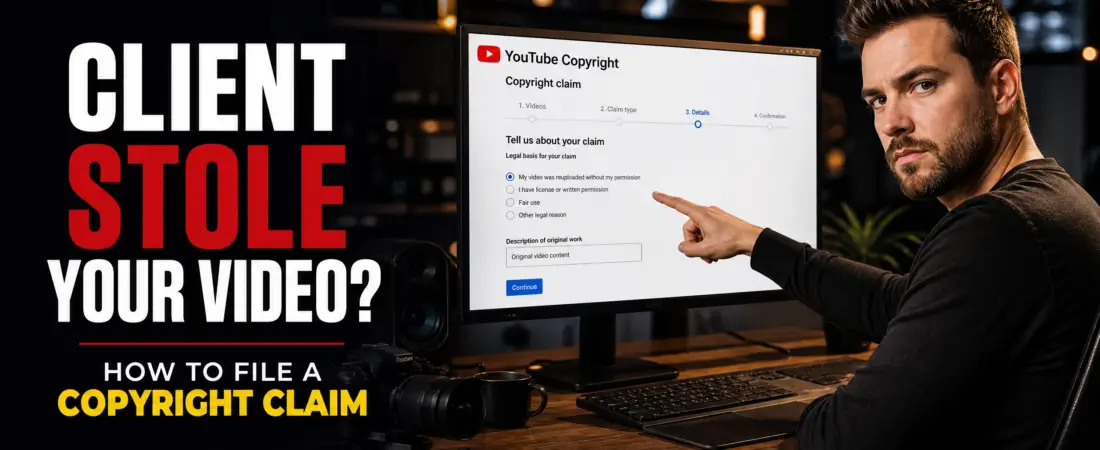
You hit export. You upload the final cut to Google Drive. You send the link to your client and wait for the final milestone payment.
Then, silence.
A week later, you get a YouTube notification. Your client uploaded the video. It already has 50,000 views. Ads are running.
They are making money. You are not.
I have sat across the table from dozens of freelance editors in this exact spot. It hurts. You feel stupid. But you aren’t.
This happens constantly in the creator economy.
The mistake? You handed over the final asset on a promise.
The consequence? They monetized your labor while your invoice gathers dust.
In many freelance projects, unless your contract transfers copyright earlier or qualifies as a work-for-hire arrangement under applicable law, you generally retain ownership of your creative work until the agreed rights transfer takes effect.
That distinction can become your strongest source of leverage when a client publishes your work without completing payment.
Look, we aren’t here to cry about unfair clients. We are here to fix the cash flow.
Here is exactly how video editors can legally force a client’s hand using automated YouTube copyright strikes.
Table of Contents
The Real Problem : Monetized Theft on YouTube
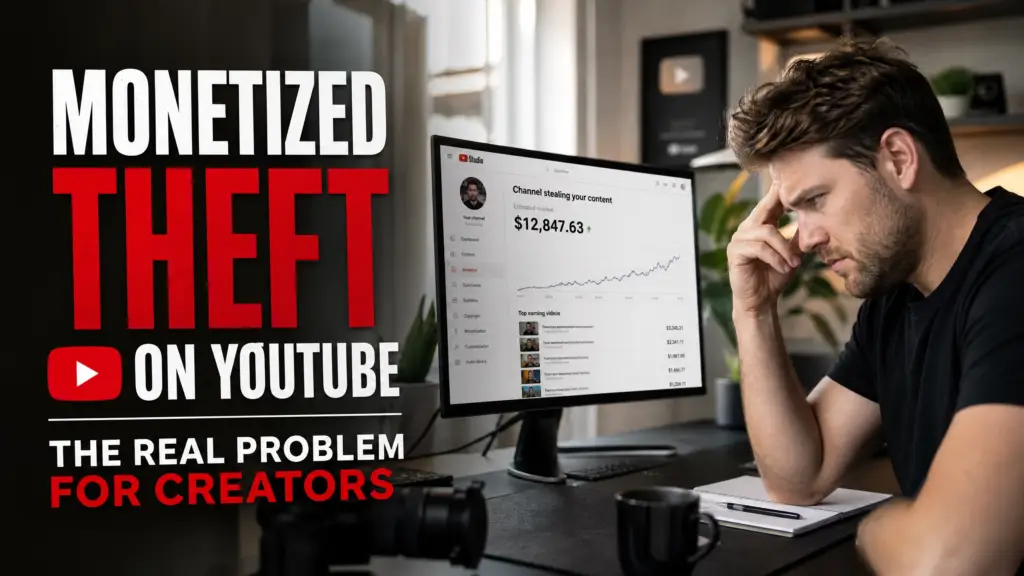
When a client uploads your unpaid work to a monetized channel, the dynamic shifts.
They are no longer just late on an invoice.
They may be commercially exploiting creative work that you still own or control under your agreement, depending on the terms of your contract and the applicable copyright law.
If you are wondering what to do when a client uses your work but refuses to pay you, the answer is simple. You shut down the asset.
Most editors freeze up here. They send polite follow-up emails. They get ignored.
If your client ghosted you after you sent the invoice, another email won’t help.
The practical objective is to interrupt the client’s ability to continue monetizing work they may not yet have the legal right to exploit.
YouTube maintains formal copyright reporting procedures to preserve its legal protections under the DMCA and other applicable laws.
Freelancers can lawfully use these established reporting mechanisms when they genuinely retain the relevant copyright.
Case Study : The $3,000 Documentary Edit
One dispute I worked on involved a freelance editor whom I’ll call Alex.
Alex cut a 40-minute mini-documentary for a mid-sized tech channel. The contract was $4,000. He got $1,000 upfront.
Alex finished the job. He sent the clean file. The client promised to pay “by Friday.”
Friday came and went. A month passed.
Alex found the video on the client’s channel. It had 250,000 views.
Alex felt trapped. He asked me, “Can a WhatsApp chat count as a legally binding contract?“
Yes, it can. But litigation takes months.
We didn’t sue. We filed a Digital Millennium Copyright Act (DMCA) takedown directly through YouTube.
Within 48 hours, the video was removed. The client lost their ad revenue instantly.
Three hours after the strike hit, the client wired Alex the remaining $3,000.
Understanding IP Transfer and Default Law
Here is the thing: clients think paying a deposit buys them the video.
It does not.
Copyright ownership is determined by the governing law and the wording of your agreement—not simply by whether a payment is overdue.
In many freelance engagements, creators retain copyright unless they have expressly assigned it, licensed it, or agreed to a valid work-for-hire arrangement.
Before filing any takedown request, review your contract carefully to confirm that you still own the relevant rights.
Where the copyright has not already been assigned or licensed under your agreement, you may still own the finished work despite the unpaid balance.
This is true whether you are editing a vlog, building a website, or writing code. If a client uses your work without paying, you use a content kill clause to rip it down.
When you file a strike, you are legally asserting that you are the copyright holder.
If your contract has not already transferred ownership or granted the client the relevant rights, you may still be the copyright owner and therefore eligible to submit a copyright complaint.
Before You File a DMCA Request: Confirm These Three Things
Before submitting any copyright complaint, verify the following:
- You still own the copyright under your contract or applicable law.
- The client has not received an exclusive licence or copyright assignment.
- The uploaded content substantially matches your original work.
Submitting a knowingly false DMCA notice can expose you to legal consequences and may affect your YouTube account. When ownership is unclear, obtain legal advice before filing.
Navigating the YouTube Studio Copyright Match Tool
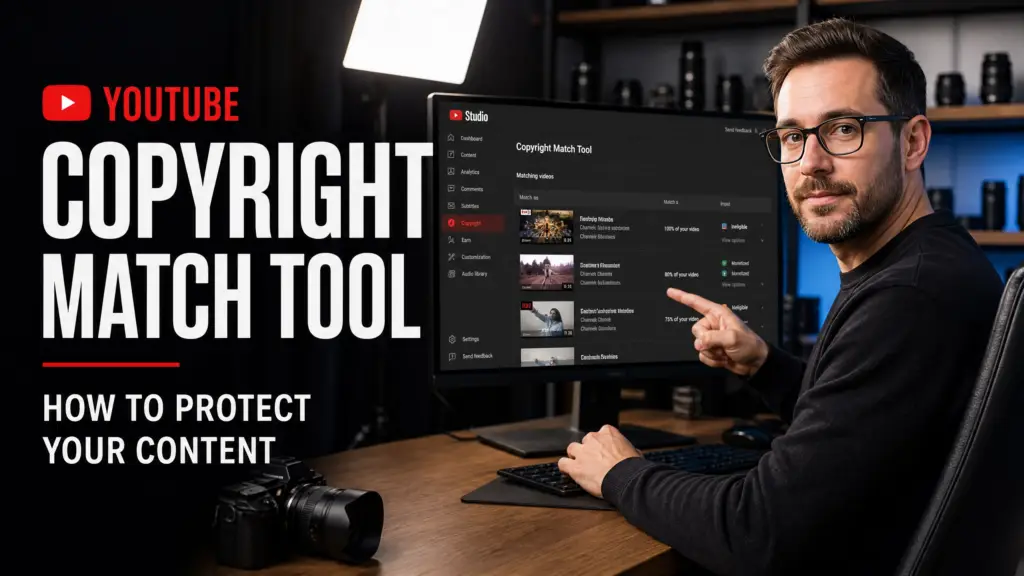
YouTube actually makes this surgical and mechanical.
If you have your own YouTube channel, you have access to the Copyright Match Tool.
You don’t need to manually hunt down your stolen videos. YouTube’s algorithm does it for you.
Here is how the detection process typically works.
First, upload your final edit to your own YouTube channel.
Set the visibility to “Private.”
Do not publish it. Just let it sit on YouTube’s servers.
Why? Because YouTube generates reference data that helps its systems identify substantially matching uploads.
When your client uploads that exact same video to their channel, the algorithm flags it.
It will appear in your YouTube Studio under the “Copyright” tab as a match.
Takedown Notice Setup for Unpaid Contractors
Once you see the match, you have a choice.
You can request removal.
This isn’t a casual request. It is a formal legal action under the Digital Millennium Copyright Act (17 U.S. Code § 512).
Click the “Request Video Removal” button.
YouTube will ask for your legal name, your address, and your relationship to the copyrighted content.
You state clearly: “I am the original creator and copyright owner. The uploader has not secured a license or paid for the rights to use this work.”
Before you click submit, check your communication logs. Have you established the exact follow-up timeline for late freelance invoices?
You want a paper trail showing you tried to resolve the payment issue first.
The Warning Strike vs. The Standard Takedown
YouTube gives you two removal options.
Option one: Scheduled – Send a 7-day notice.
Option two: Standard – Request removal now.
I almost always recommend the 7-day notice for first-time offenders.
It gives the client exactly one week to clear the invoice before their channel takes a permanent copyright strike.
A strike hurts their channel metrics. It threatens their monetization.
This is usually when it is officially time for a freelancer to take legal action. But a 7-day warning often resolves the issue without courts.
If they ignore the 7-day warning, the video vanishes, and the strike becomes permanent.
If they are a massive creator, this is a significant operational and monetization risk.
This exact leverage works across industries. It is the same logic when a brand is not paying an influencer—you cut off the attention supply.
Countering the Client’s Bad-Faith Counter-Notice
Sometimes, clients get bold.
They will file a counter-notification with YouTube, claiming they have the right to the video.
A counter-notification does not automatically mean your claim will fail. It simply begins the next stage of YouTube’s statutory DMCA process. This is usually a bluff.
A knowingly false counter-notification may expose the sender to legal consequences under applicable law because it is submitted under penalty of perjury.
YouTube will forward you their counter-notice. You then have 10 to 14 business days to respond.
To keep the video down, you must show YouTube that you have initiated court action against the client.
This sounds scary. It isn’t.
You don’t always need a high-priced attorney. You can often handle this yourself if you know how to recover an unpaid invoice without hiring a lawyer.
Depending on your jurisdiction and the value of the dispute, commencing an appropriate legal proceeding may satisfy YouTube’s requirement to maintain the takedown after a counter-notification.
Independent legal advice is advisable before taking this step.
United States vs. Global Legal Landscape
If you are a freelancer in India dealing with a US client, or vice versa, things shift slightly.
In the US, the DMCA rules the internet. According to the US Copyright Office, platforms have “safe harbor” as long as they remove stolen content when notified.
In India, we look at Section 52 of the Copyright Act and Section 79 of the IT Act.
The mechanism is largely the same. Intermediaries (like YouTube) must disable access to infringing material upon receiving actual knowledge.
If you are navigating this, knowing how to protect yourself when working with international clients is vital.
The beauty of YouTube is that its internal strike system applies globally.
You do not have to fly to London or New York to enforce your rights. Although copyright laws differ across jurisdictions, YouTube applies a standardized copyright reporting framework worldwide.
The legal basis of your claim still depends on the governing law and your contract, but the reporting workflow remains broadly consistent for creators using the platform.
The Evidence Checklist
Before you file a strike, you must bulletproof your claim.
If you issue a false strike, your own channel can be terminated.
Gather this evidence before clicking submit:
- The Original Contract : Even an email thread agreeing to terms works.
- The Unpaid Invoice : Ensure it clearly outlines the project. (Learn how to design an invoice that accounts payable teams can’t ignore).
- Delivery Proof : Screenshots of the Google Drive or Frame.io transfer.
- The Non-Payment Paper Trail : Emails where they make excuses or ghost you.
- The Source Files : Keep your Premiere Pro or DaVinci Resolve project files safe. These prove you made it.
| Situation | DMCA Recommended? |
| No payment + no copyright assignment | ✅ Usually Yes |
| Work-for-Hire agreement | ❌ Usually No |
| Exclusive licence already granted | ❌ Usually No |
| Ownership disputed | ⚠ Seek legal advice |
| Client uploaded draft without permission | ✅ Often Yes |
Official Resources
• YouTube Copyright Match Tool
• Information Technology Act, 2000
The Risk Matrix for DMCA Takedowns
Not every situation calls for a nuclear option. Let’s look at the actual risk levels.
| Scenario | Strike Risk Level | Your Next Move |
| Client signed a “Work for Hire” agreement upfront, but hasn’t paid yet. | High Risk | Do not file a strike. You signed rights away early. Sue for breach of contract instead. |
| Client used a 5-second clip of your work in a 20-minute video. | Medium Risk | Client might claim “Fair Use.” Better to send a formal cease and desist first. |
| Client uploaded your entire final cut without paying the final 50% milestone. | Low Risk | A takedown request may be appropriate if your legal position is clear and your evidence supports the claim. |
| You did the work without any written agreement or emails. | Medium Risk | Risky. Establish a paper trail proving non-payment before striking. |
The Psychological Trap of Unpaid Work
Creators often feel guilty asking for money.
Agencies know this. They exploit it.
There are 7 brutal truths about clients who use your copy or video but refuse to pay. The biggest truth ? Repeated non-payment often reflects a commercial risk rather than a simple administrative oversight.
When you file a copyright strike, The legal dynamics change immediately because the discussion moves from payment reminders to intellectual property enforcement.
You move from “annoying freelancer” to “legal threat.”
I have seen clients who ignored emails for six months suddenly wire money in ten minutes when their channel monetization is paused.
This isn’t just about videos, either.
If you are a designer, you can file a copyright infringement claim for unpaid UI wireframes.
If you are a writer, you can strike a site when a client publishes your article but didn’t pay.
Intellectual property is one of the strongest legal protections available to independent creators. Learn to wield it.
How to Stop This Before It Starts
The best strike is the one you never have to file.
You need to change your delivery mechanics.
Never hand over a clean, high-resolution final file before the money clears.
Watermark everything. Use timecodes. Lower the bitrate.
If they want the pristine cut, they pay the invoice.
This is basic boundary setting. You have to stop working for free and prevent scope creep from ruining your business.
Send a low-res cut for approval. Once approved, send the final invoice.
Only release the final download link when the cash is in your bank account.
Tool : The Pre-Strike Warning Generator
If you want to give the client one last chance before pressing the button on YouTube, send a formal pre-strike notice.
Use this HTML generator framework to draft a clean, mechanical warning email.
Pre-Strike Warning Notice Generator
Input your project data below to generate a clean, strategic, legal notice. Copy the final template and drop it right into your email client.
Live Preview
Final Notice of Impending DMCA Action
To: John Doe Media Inc.
Subject: URGENT: Copyright Infringement & Unpaid Invoice #INV-2026-089
It has come to my attention that you have published the video asset “10 Rules of Scale Video Edit” to your YouTube channel on June 24, 2026.
As per our records, Invoice #INV-2026-089 remains unpaid. Under international copyright law, the intellectual property rights for this asset do not transfer until full payment is received.
You currently do not have the legal right or license to broadcast, monetize, or distribute this work.
Required Action: Please process the outstanding payment of $1,500.00 USD immediately via https://stripe.com/pay/yourlink.
If payment is not secured within 48 hours, I will file a formal DMCA copyright takedown notice with YouTube, which may result in a copyright strike against your channel and disruption of your monetization.
Govern yourself accordingly.
Regards,
Alex Smith
Copy that text. Fill in the brackets. Send it.
Keep the tone ice cold. No apologies. No emojis.
Quick Decision Framework
Let’s simplify everything.
Mistake : You trusted a client and delivered the final asset before payment.
Consequence : The client is generating ad revenue using your stolen IP.
Law : Copyright ownership depends on your contract and the applicable law. In many freelance projects, creators retain ownership unless those rights have already been assigned.
If the client is small, a firm email might work.
If the client is large and ignoring you, use the YouTube Copyright Match tool.
File the 7-day warning. Watch how fast their accounting department suddenly finds your invoice.
When You Should Not File a YouTube DMCA Takedown
A DMCA request is not appropriate in every dispute. Consider alternative legal remedies if:
- your contract expressly transferred copyright before full payment;
- the work was created under a valid work-for-hire arrangement;
- the dispute concerns payment alone rather than copyright ownership;
- the uploaded material may qualify for a recognised exception such as fair use or fair dealing; or
- ownership of the work is genuinely disputed.
FAQs About YouTube DMCA Strikes for Freelancers
u003cstrongu003eWill YouTube penalize my channel if I file a strike ?u003c/strongu003e
No, unless you file a fraudulent strike. If you own the copyright and haven’t been paid, you are well within your rights. YouTube only penalizes abuse of the DMCA system.
u003cstrongu003eWhat if the client claims they already paid a deposit ?u003c/strongu003e
A deposit secures the start of work, not the transfer of copyright. Unless your contract explicitly states rights transfer upon partial payment (which it shouldn’t), you still own the final asset.
u003cstrongu003eCan I use this tactic on platforms other than YouTube ?u003c/strongu003e
Yes. Instagram, TikTok, and Vimeo all have mandatory DMCA takedown procedures. You can file strikes on any US-based social media platform.
u003cstrongu003eWhat if they delete the video and still refuse to pay ?u003c/strongu003e
You have stopped the bleeding. They can no longer profit from your work. To get your money, you will now need to pursue standard debt recovery or small claims court.
u003cstrongu003eHow long does YouTube take to process a takedown request ?u003c/strongu003e
Standard requests are usually processed within 24 to 72 hours. If you select the 7-day scheduled notice, YouTube will remove it exactly 7 days later if the client hasn’t complied.
Final Thoughts on Leveraging IP
Treat your creative work as a commercial asset rather than a completed task. Intellectual property is often the strongest security freelancers possess when invoices remain unpaid.
You are a business owner dealing in intellectual property.
When a client refuses to pay for a video they are actively using, it is not an administrative error. In many cases, continued commercial use of unpaid work raises serious copyright and contractual issues that deserve prompt attention.
Use the tools built into these platforms. Protect your cash flow.
If you don’t defend your work, no one else will.
About Author
Adv. Sagar Haribhau Shirsat is an active legal professional specializing in commercial transaction architectures, cross-border corporate compliance, and digital debt recovery systems. He designs strategic asset-protection and recovery frameworks that help freelancers, independent contractors, and global agencies defend their cash flow and enforce their billing rights.
Connect via his Official Professional LinkedIn Profile.
Disclaimer : This guide is intended for educational purposes and risk management analysis. It does not replace formal legal counsel. For specific cross-jurisdictional contract disputes, always consult a certified attorney or local legal advocate.