
I was sitting in a studio in Soho a few years back with a brilliant sound engineer. Let’s call him Mark. He had just spent three weeks mixing an indie feature film.
The director loved the early passes. The producers approved the stems.
Then, exactly two days before the final invoice was due, the production company sent a cold email.
They claimed the mix “didn’t align with their final vision.” They told Mark they were going in a different direction. They refused to pay his final $6,000 balance.
At that point, the dispute wasn’t about artistic taste anymore—it was about whether substantial technical work already completed still had measurable commercial value.
When the film finally dropped on a streaming platform, Mark watched it.
They hadn’t hired another professional. They removed his final mix while continuing to benefit from the technical foundation he had already created.
The finished audio reflected a noticeably different production standard. But more importantly, they stole his timeline architecture just to save a few grand.
Your colorist or sound engineer work was stripped out and re-done badly just to avoid invoices. It happens every single day in post-production.
In some cases, this may reflect a bad-faith attempt to avoid paying for substantial work already performed.
Directors and producers run out of budget at the finish line. Instead of admitting they are broke, they manufacture a creative dispute.
They strip your polished color grade, drop a crude LUT on your timeline, and claim they “didn’t use your work.”
If you are dealing with this right now, you need to act fast.
Every day that passes after the final cut is exported, your leverage drops. The urgency here is real.
Once the project is delivered to the distributor or uploaded to YouTube, the client stops caring about you entirely. You become an annoying email in their junk folder.
We need to trap them before they close their books. We do this by moving from the problem, directly into the law, and executing a ruthless solution.
Can a Client Use Your Work and Still Refuse to Pay ?
Sometimes they try. Whether they can legally do so depends on the contract, the work already completed, the governing law, and whether they continued to benefit from your services. Even when the final creative version changes, freelancers may still have legal or contractual rights to payment for completed technical work.
Table of Contents
The Bad-Faith Replacement Maneuver after Client Used Your Work but Didn’t Pay
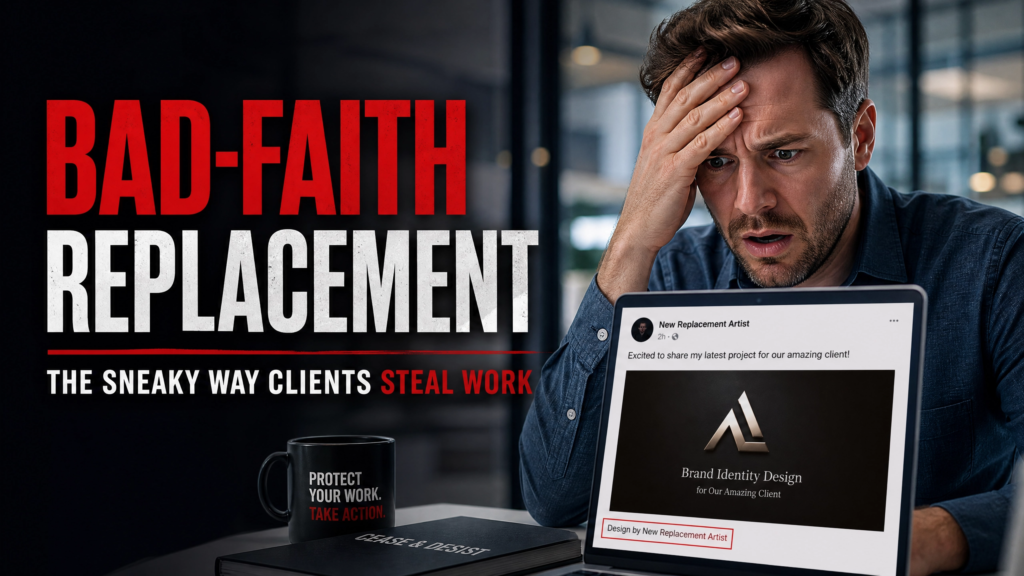
Let me explain exactly how this scam works. Post-production is highly technical. Clients know they need your specialized skills to organize the chaos.
They need you to conform the XML. They need you to sync the audio. They need you to balance the primary nodes.
But once you do the heavy lifting, the project is organized.
A shady client realizes they can easily take your structured Premiere or DaVinci Resolve file, strip the final creative layer, and export it themselves.
They usually use the classic excuse: “We aren’t using your final deliverables, so we aren’t paying the final invoice.”
This is garbage. You don’t just sell final renders. You sell your engineering process.
If they used your project files, your timelines, or your rough drafts as a pacing guide, they consumed your commercial services.
If you suspect they pulled this trick, you have to find out what to do when a client uses your work but refuses to pay.
The Pro-Rata Valuation Audit
To win this fight, you must stop arguing about art. Stop arguing about whether their basic LUT looks worse than your custom grade.
You need to run a Pro-Rata Valuation Audit. This is a cold, clinical breakdown of the exact technical steps you completed before they pulled the plug.
Did you ingest 4 terabytes of footage? That has a monetary value.
Did you spend 15 hours doing dialogue cleanup before they scrapped the mix? That has a monetary value.
You need to audit your own labor. List every single technical milestone you crossed that they still benefited from.
When you itemize the raw data processing, their “creative differences” argument falls apart.
If they retained and benefited from your synced timeline, you may have a strong claim for compensation depending on your contract and the applicable law.
It is really that simple. You just have to know how to recover an unpaid invoice yourself without a lawyer.
The Flow of Bad-Faith Scrapping
- Phase 1 : Client receives your heavy technical labor (syncing, conforming, organizing).
- Phase 2 : Client reviews your creative draft (color pass, preliminary mix).
- Phase 3 : Client claims to hate the creative direction to trigger a contract kill.
- Phase 4 : Client keeps the technical foundation, applies amateur fixes, and dodges the bill.
Comparison table
| Situation | Usually Paid? | Notes |
|---|---|---|
| Final work delivered | Yes | Contract controls |
| Draft reviewed | Often | Depends on agreement |
| Timeline used | Often | Evidence matters |
| Files transferred | Usually | Review license terms |
| Project cancelled | Sometimes | Jurisdiction-specific |
Assessing Value of Work Delivered in Draft
Never let a client tell you that a draft has no value.
In the film and commercial world, rough drafts are essential. They dictate pacing. They guide edit decisions.
If an agency reviews your draft color grade and decides to recut the video based on your mood board, they extracted value from your labor.
You need to bill for that extraction.
A lot of freelancers get scared here. They think, “Well, the contract says payment on final delivery.”
That is why you must structure your agreements differently. But even if you didn’t, Depending on the governing law, you may have legal remedies available.
When a client demands a full refund over one unfinished feature, you have to push back with an itemized list of completed phases.
You must separate the engineering from the creative polish. They cannot steal the engine just because they didn’t like the paint job.
The Breach of Creative Collaboration Terms
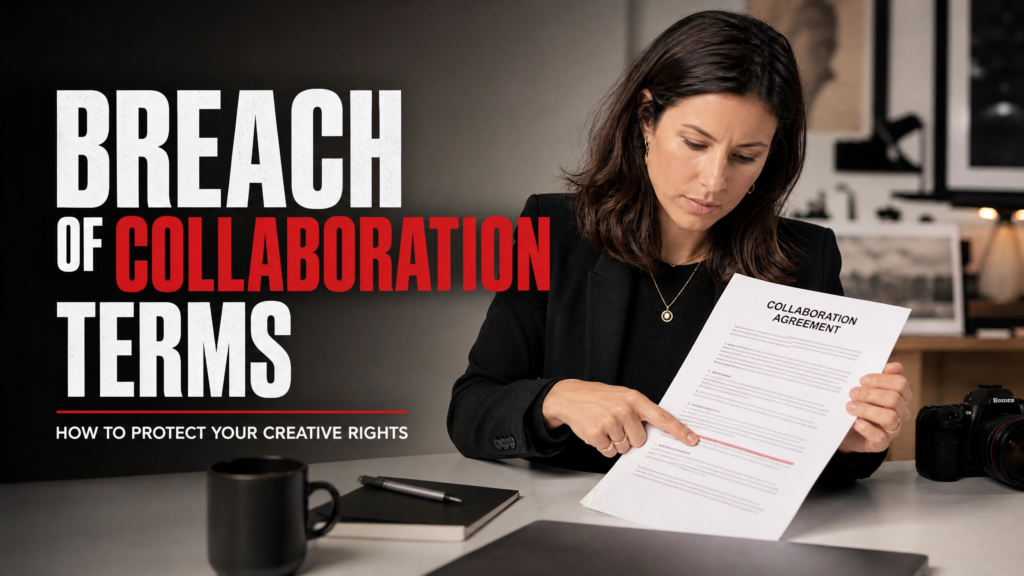
Now we move to the law. Don’t worry, I will keep this incredibly simple.
When a client hires you, there is an implied covenant of good faith and fair dealing.
They are legally required to cooperate with you so you can finish the job and get paid.
By taking your project file, stripping your effects, and locking you out, they breached that duty.
There is a legal concept in the US and UK called Quantum Meruit.
Courts generally evaluate factors such as the value of the services performed, whether the client accepted or benefited from those services, and the surrounding contractual relationship. The exact test varies by jurisdiction.
According to the Legal Information Institute at Cornell Law School, this doctrine allows you to recover the reasonable value of your services even if a contract wasn’t fully completed.
If they unjustly enriched themselves by keeping your synced audio stems, the law says they must compensate you.
Even if you only agreed over text, you can enforce this. You’d be surprised to learn that a WhatsApp chat can count as a legally binding contract.
What Courts Usually Look At: The 8 Pieces of Evidence That Win Unpaid Freelance Disputes
When a client runs off with your work and leaves an invoice unpaid, things get emotional. You feel insulted. Your hard work was pushed aside.
But if you end up in a small claims court or an arbitration hearing, the judge does not care about your feelings. They do not care about artistic vision either.
Courts run on a completely different currency. They run on cold, hard data.
I have watched dozens of incredibly talented post-production engineers, colorists, and mixers lose clear-cut cases. Why? Because they walked into the room with an attitude instead of an organized folder of paper trails.
Look, here’s the thing: a judge is essentially a data analyst with a gavel.
They want to see a clear story of offer, acceptance, performance, and breach. If you cannot show them that story using objective records, you will lose.
If you are trying to figure out how to recover an unpaid invoice yourself without hiring a lawyer, you need to know exactly what a court evaluates.
Here are the eight specific items a court will look at to decide who gets paid.
1. Contracts
This is always the baseline. A judge will immediately ask for the signed agreement. They want to see the boundaries of your relationship.
The contract tells the court what you promised to do, what the client promised to pay, and when that payment was due.
[Contract Framework] ──> Establishes Mutual Obligations ──> Defines Breach
If you do not have a formal, multi-page contract, do not panic yet.
A judge will look for anything that functions as an agreement. I regularly see simple digital agreements stand up perfectly under legal scrutiny.
If you want to protect your future projects, you should learn how to structure a proposal so it functions like a real legal defense contract.
2. Emails
If the contract is the skeleton of your project, emails are the flesh. Courts read email threads to understand the actual reality of your working relationship.
Emails prove what happened when things started going off the rails.
The court looks at emails to find out if the scope changed mid-project. They look to see if the client asked for extra work without expecting to pay for it.
This is why you must keep all communication professional and clear.
If you have a habit of doing undocumented work over the phone, you are exposing yourself to massive risk. You must actively learn to prevent scope creep from eating your profits.
3. Approvals
An approval is a massive legal shield for a freelancer.
When a client reviews a draft and types “This looks incredible, let’s move to the next stage,” A written approval can become powerful evidence that the client accepted that stage of the work, although its legal effect depends on the contract and applicable law.
A court looks for these explicit green lights.
If a client later claims your work was “unusable” just to avoid an invoice, I simply point to their written approvals.
A written approval can significantly weaken a later argument that the work was unusable. Once a phase is approved, the client’s legal right to claim a quality issue drops significantly.
Even informal messages can hold serious weight here. In fact, under modern rules, Depending on the jurisdiction and surrounding evidence, WhatsApp messages may help establish contractual terms or acceptance.
4. Invoices
Your invoice is your formal, legal demand for payment. A court evaluates your invoices to check for clarity, consistency, and accuracy.
If your invoice is vague, a judge might find it difficult to enforce.
An invoice that simply says “Post-Production Services” invites arguments. The client can easily claim they did not receive what they expected.
Instead, your invoices must match the exact milestones outlined in your initial communications.
To make sure your billing documents hold up under legal review, you should know how to design an invoice that accounts payable teams simply cannot ignore.
5. Milestone Payments
If a client paid your initial 25% or 50% deposit, they have already hurt their own legal defense.
Courts look at milestone payments as absolute proof that a valid contract existed and was actively being executed.
[Deposit Received] ──> Proof of Valid Agreement ──> Client Acknowledges Obligation
By making a partial payment, the client legally acknowledged your role and agreed to your pricing terms.
They cannot easily turn around later and claim they never officially hired you.
If they paid the first two milestones and stopped on the third, the judge will want a highly specific, objective explanation from them as to why their behavior suddenly changed.
Understanding how these timelines interact is vital for your cash flow. Take a look at how Net 15 vs. Net 30 vs. Net 45 payment terms protect your business.
6. Exported Drafts
When a creative dispute occurs, you have to prove you actually did the work. This is called performance.
Courts look at your exported drafts as tangible evidence of your labor.
I recommend keeping a clean archive of every watermarked render or low-res mix you sent to the client.
These files show the steady progress of the project. They prove you were fulfilling your side of the bargain.
If a client cuts you off but keeps a draft, they are dealing with major legal issues. You can read exactly what to do when a client uses your work but completely refuses to pay you.
7. File Delivery Logs
“I never received the files” is the oldest excuse in the book. Shady clients love to use this line to justify a delayed payment.
Delivery logs often carry substantial evidentiary value.
A judge looks directly at file delivery logs from platforms like Frame.io, WeTransfer, Dropbox, or Google Drive.
These logs provide undeniable metadata.
They show the exact date, time, and IP address that accessed your deliverables.
If the log shows the client downloaded a 50GB file three times, their claim of non-delivery is completely dead in the water.
8. Revision History
The final piece of the puzzle is the evolution of the project. Courts look at the revision history to see who was acting in good faith.
A long trail of revisions shows a collaborative, professional effort to satisfy the client’s needs.
If the revision history shows you made every single adjustment requested, the client cannot easily claim you were uncooperative.
It proves you stuck around to do the job right.
If they abruptly cut off communication after a routine revision pass, the court will likely see it as a clear contract breach.
The Courtroom Evidence Weight Matrix
Important: The relative importance of each type of evidence varies by jurisdiction, procedural rules, and the specific facts of the dispute. This table is intended as a practical guide rather than a universal legal rule.
To help you see how a judge processes these items, I have broken down the legal weight of each asset class below.
| Evidence Asset | What the Judge Learns from It | Legal Weight in Court |
| Signed Contract | The clear rules, scope, and agreed pricing. | Critical / High |
| Written Approvals | That the client accepted the specific phase of work. | High |
| File Delivery Logs | Undeniable proof that the client received the files. | High |
| Milestone Payments | Conduct proving the client recognized the contract. | Medium to High |
| Email Threads | Context of day-to-day changes and scope shifts. | Medium |
| Revision History | Proof of your ongoing professional cooperation. | Medium |
| Exported Drafts | Visible proof of physical performance of labor. | Medium |
| Invoices Sent | The formal demand and calculation of debt. | Procedural Requirement |
US & UK vs. Global Legal Realities
- United States : You can lean heavily on implied contracts and Quantum Meruit. Copyright ownership and licensing rules vary depending on employment status, work-for-hire provisions, contractual assignments, and local law.
- United Kingdom : The UK provides statutory rights to charge interest on commercial debts. Under the Late Payment of Commercial Debts Act, you can hammer them with late fees if they strip your work and ignore the invoice.
- Global/Cross-Border : International recovery relies on cutting off their distribution assets. You can read exactly how to protect yourself when working with international clients.
Demanding Settlement for Scrapped Custom Engineering
You do not beg for this money. You demand a settlement for unauthorized use of your custom engineering.
When you write the email, remove all emotion. Do not tell them their new color grade looks terrible.
They don’t care. They know it looks terrible. They just want to save money.
Instead, outline exactly what technical assets they retained.
If they used your video project file, you need to treat it like a client using your video without paying.
Tell them you are auditing the final release to match the meta-data against your project files.
Watch how fast they panic when they realize you aren’t fighting about art, but about data theft.
If they still ignore you, you must use a content kill clause to shut it down.
The Pro-Rata Settlement Calculator
Use this simple HTML tool to calculate exactly what you should demand in your settlement letter when a client strips your work.
Pro-Rata Settlement Calculator
Creating Invoices That Force Their Hand
If they try to drag this out, you have to weaponize your paperwork.
Accounts payable departments don’t care about director drama. They care about clear liability.
If you submit a standard invoice for “Color Grading,” it’s easy for the producer to dispute it.
Instead, you need to design an invoice that accounts payable teams can’t ignore.
Itemize the invoice. List “Timeline Conforming,” “Audio Syncing,” and “Asset Management.”
They can’t claim they didn’t use those services. The project wouldn’t exist without them.
And if they try to string you along for months, remember that you can legally charge interest on late invoices.
Evidence Checklist : What You Need to Win
Before you send that aggressive settlement demand, gather your ammunition.
I have seen freelancers lose dead-to-rights cases because they deleted their timelines in a fit of rage. Don’t do that.
Here is exactly what you need to save to a backup drive right now.
- The Original XML/AAF : Save the exact timeline you delivered to them.
- Timestamped Drafts : Keep every single rough cut you uploaded to Frame.io or Vimeo.
- Email Approvals : Screenshot any message where they said, “Sync looks good” or “Love the skin tones here.”
- The Final Release : Screen record their final published video. You will need to compare their “new” work against your foundational timeline.
If you catch them using your specific assets without permission, it escalates. At that point, you might need to write a clean cease-and-desist letter.
The Risk Matrix for Post-Production Freelancers
Let’s be brutally honest about the risks of fighting back. You need to know what you are walking into.
Low Risk : Sending an itemized pro-rata invoice for technical services rendered. It is highly professional and establishes your boundaries.
Medium Risk : Refusing to release final high-res project files until the draft stages are paid in full. They might get angry, but you are protecting your leverage.
High Risk : Filing a DMCA takedown on the final film. This is the nuclear option. It works, but it will burn the bridge permanently.
Sometimes, burning the bridge is the only logical choice. If they stole your work, they aren’t a client. They are a liability.
You need to know exactly when it is officially time to take legal action.
Stop Working for Free
This entire situation usually stems from bad boundaries early in the project.
Post-production engineers are notorious for doing “just one more pass” to keep the client happy.
You do a free conform. You fix their broken frame rates for free.
By the time they cancel the project, you have given away $2,000 in free technical labor.
You have to prevent scope creep from eating your profits.
Charge for the ingest. Charge for the proxy creation.
If they cancel the creative grade later, at least you got paid for the heavy lifting.
Dealing with Agencies vs. Direct Clients
If you were hired by an agency rather than the end-client, the dynamic shifts.
Agencies are terrified of their clients finding out that the project is a mess behind the scenes.
If an agency strips your work to save budget, they are usually hiding a larger failure from the brand.
You can use this leverage.
If they refuse to pay for your underlying timelines, remind them that unpaid subcontractors can sometimes sue the end-client directly.
The moment you threaten to CC the main brand on your unpaid invoice, the agency will magically find the budget to settle your pro-rata claim.
The Moral Rights Argument
Beyond the money, there is a legal concept known as Moral Rights, or Droit Moral.
According to the World Intellectual Property Organization (WIPO), creators have the right to claim authorship and object to derogatory action against their work.
If they strip your beautiful grade, replace it with a garbage filter, and leave your name in the credits, they are damaging your reputation.
You have the right to demand your name be removed.
More importantly, you can use the threat of a “derogatory action” claim to force a financial settlement.
Tell them: “You altered my work in a way that damages my professional standing. Pay the kill fee, and I will sign a non-disclosure agreement.”
This may encourage meaningful settlement discussions.
And never accept ridiculous corporate payment delays after a dispute. You need to read the freelancer payment terms guide to avoid Net 60.
Quick Decision Section
If your work was just stripped and you are staring at your screen in anger, follow this exact sequence today:
- Do not send an emotional text message.
- Archive the final project files immediately.
- Send an email stating: “I am acknowledging your decision to pivot creatives. I will be sending a pro-rata invoice for the technical timeline conforming completed to date.”
- Calculate your technical hours.
- Send the invoice with a strict Net 15 deadline.
If they ghost you, you execute the exact follow-up timeline for late invoices that actually works.
Look, nobody likes dealing with this. It feels like a massive betrayal of trust.
But you are running a business. You are an engineer. You provide a structural service that has distinct market value.
Do not let them gaslight you into believing your foundational work was worthless just because they changed the paint color at the last minute.
Stand your ground, run the audit, and collect your money.
FAQs : Recovering Scrapped Engineering Work
Can they legally refuse to pay if they didn’t use the final render ?
No. If your contract doesn’t explicitly state payment is solely contingent on final approval, they owe you for the labor performed up to the cancellation point. The legal doctrine of Quantum Meruit protects you here.
What if they claim the quality of my work was the reason for cancellation ?
Quality is subjective. Technical milestones are objective. You must shift the conversation away from creative preferences and bill them for the technical data processing, syncing, and organizing you completed.
Should I withhold the project files until I get paid ?
Yes. Never hand over your raw DaVinci, Premiere, or ProTools files if the invoice is open. If they want the technical architecture you built, they have to buy it from you.
How do I prove they used my underlying timelines ?
You can often spot your exact sync points, audio crossfades, or pacing structure in their final release. Document these timestamps. Compare the meta-data of their release against the drafts you provided.
Is it worth hiring a lawyer for a $3,000 cancelled project ?
Usually, no. The legal fees will eat your recovery. You are better off using aggressive pro-rata billing, leveraging late fees, and threatening to contact the end-client or platform for copyright infringement.
Author Box
Adv. Sagar Haribhau Shirsat is an active legal professional specializing in commercial transaction architectures, cross-border corporate compliance, and digital debt recovery systems. He designs strategic asset-protection and recovery frameworks that help freelancers, independent contractors, and global agencies defend their cash flow and enforce their billing rights.
Connect via his Official Professional LinkedIn Profile.
Disclaimer : This guide is intended for educational purposes and risk management analysis. It does not replace formal legal counsel. For specific cross-jurisdictional contract disputes, always consult a certified attorney or local legal advocate.